On Your Side
Powerful Precision CNC
Manufacturer

During quotation-professional DFM feedback Once order placed-professional project & order management,

CNC Machining Services

Custom Injection Molding Services

Custom Sheet Metal Fabrication Services

Metal Mold Services

ISO 9001:2015, ISO 13485, IATF 16949:2016 Certified

Start Prototyping Today!

Uploadyour design fles forinstant pricing, free DFM analysis.

  • CNC Machining

  • Injection Molding

  • Sheet Metal Fabrication

  • Metal Mold

Drag and drop your files here or

Support formats: PDF, Word, Excel, Txt, JPG, PNG, BMP, GIF, RAR, ZIP, It is recommended to upload up to 5, and the single size must not exceed 20M.

Home > Titanium Alloy Machining

Titanium Alloy Machining

1777541240100530

1772524127264948

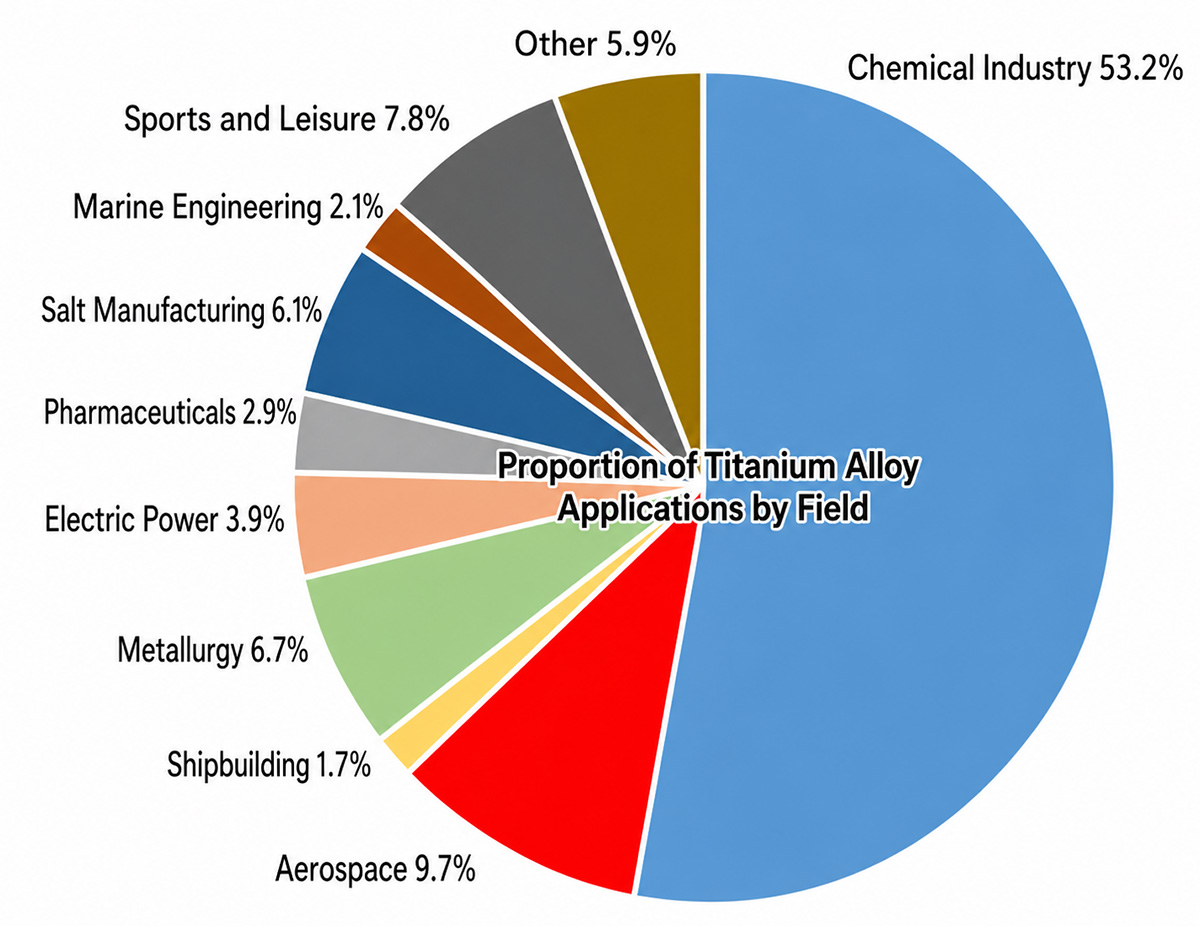
Material GradeApplication Fields & Advantages
TC4 (Ti-6Al-4V)Aerospace: Mainstream grade for aircraft structural components, suitable for fuselage frames, engine compressor disks/blades, and landing gear parts. Its specific strength reaches 180~220MPa·cm³/g, achieving 30%~50% weight reduction while maintaining structural strength.
Medical: Artificial joints, orthopedic implants/screws, and dental implants. It features excellent biocompatibility and good osseointegration, allowing long-term implantation without adverse reactions.
Automotive: High-performance engine connecting rods, turbine wheels, and exhaust system components. It withstands high temperatures (up to 600℃) and offers lightweight benefits, improving power response and fuel efficiency.
TA1/TA2 (Commercially Pure Titanium)Chemical Industry: Corrosion-resistant heat exchangers, reactors, and pipeline valves. Resistant to strong acids, strong alkalis, and seawater corrosion, with a service life 3~5 times that of stainless steel.
Marine Engineering: Ship decks, desalination equipment, and offshore platform structures. Resists seawater corrosion and marine organism adhesion.
Electronics: Precision electronic housings and heat dissipation components. Non-magnetic (does not interfere with signals), with both lightweight and excellent heat dissipation properties.
TC11 (Ti-6Al-2Zr-1Mo-1V)Aero-engine High-Temperature Components: Suitable for turbine blades and guide vanes operating continuously below 600℃. It exhibits excellent high-temperature creep resistance, with high-temperature strength 20%~30% higher than TC4.
Aerospace: Rocket engine nozzles and combustion chamber end parts, with good high-temperature oxidation resistance and thermal shock resistance.
Military: Missile bodies and engine casings, offering high strength and high toughness to resist impact deformation.
Ti-55531 (β-type High-Strength Titanium Alloy)Large Aerospace Load-Bearing Structures: Aircraft wing spars and fuselage bulkheads. Yield strength ≥1100MPa, with specific strength far exceeding aluminum alloys, suitable for large cross-section lightweight components.
Automotive: Ultra-lightweight chassis suspension parts and brake calipers. Achieves lightweighting while improving handling stability, with fatigue life 5 times that of conventional parts.
Marine Equipment: Structural parts for deep-sea exploration equipment. Resists high pressure and corrosion, suitable for working conditions below 6000m depth.
TA15 (Ti-6Al-2Zr-1Mo-2Si)Aerospace Welded Structures: Aircraft fuselage skins and wing ribs. It has excellent weldability with a weld joint strength coefficient ≥0.9, significantly reducing welding procedures.
Medical: Custom orthopedic implants and maxillofacial reconstruction plates. Good plasticity and workability, suitable for complex curved surface implants.
Energy: Nuclear power heat exchangers and solar thermal components. Outstanding high-temperature and radiation resistance.
TB2 (Ti-5Mo-5V-8Cr-3Al)Aerospace Elastic Components: Landing gear springs and control system elastic parts. Low elastic modulus (105~115GPa) and excellent fatigue resistance, with a cycle life exceeding 10⁷ times.
Military: Radar antenna frames and weapon system guides. Non-magnetic with no electromagnetic interference, while achieving lightweight and precision.
Automotive: New energy vehicle motor end covers and high-voltage connector brackets. Offers corrosion resistance and lightweight benefits, improving the reliability of electric drive systems.
Summary of Overall Application Advantages1. Core Lightweight Advantage: Density is 4.5g/cm³, only 60% that of steel. Single components achieve 30%~60% weight reduction, lowering energy consumption and improving range/efficiency.
2. Extreme Environment Adaptability: Wide temperature range (-253℃~600℃), corrosion resistance, radiation resistance, and high-temperature oxidation resistance, suitable for harsh scenarios in aerospace, marine, and chemical industries.
3. Multi-Functionality: Combines high strength, high toughness, biocompatibility, and non-magnetic properties, covering aerospace, medical, electronics, and military fields.
4. Long Service Life: High fatigue resistance and low wear. Service life of implants/components reaches 10~30 years, reducing maintenance costs.
Problem TypeDescription
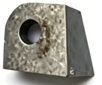
Surface Oxide Scale / Residual ContaminationResidual heat treatment oxide scale and oil stains on titanium alloy surface1777540438402526
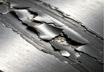
Over-Pickling & Hydrogen EmbrittlementPitting and uneven surface after pickling, with microcracks in severe cases1777540441445826
Poor Adhesion of Coating / Plating LayerBlistering and peeling of the coating, with no obvious bonding layer at the interface17775404501523661777540452126535
Defects in Anodized FilmUneven color, pinholes and pitting on the oxide film; loose and porous film structure17775404596146111777540464957470
Peeling of Carburized / Nitrided LayerPeeling and flaking of the hardened layer, with brittle phases at the interface1777540467617254
Abnormal Surface RoughnessSurface roughness does not meet requirements; too coarse or too fine, with waviness / scratch defects17775404732801191777540479603796
Unstable Passivation FilmPitting corrosion on the surface in chlorine-containing environments, with local damage and peeling of the passivation film1777540484346693

1772524165172428

CausesSolutions
1. The dense oxide layer (TiO₂) formed during heat treatment is not completely removed; 2. Oil stains, iron ions and other contaminants introduced during machining/storage; 3. Insufficient pre-treatment degreasing and pickling processes.- Process Optimization: Adopt the combined process of "alkaline degreasing + nitric acid-hydrofluoric acid pickling + ultrasonic cleaning" to ensure complete removal of oxide layers.
- Process Control: Perform passivation immediately after pickling to prevent re-oxidation; use sealed anti-pollution packaging during storage to avoid iron ion contamination.
- Quality Inspection: Verify surface cleanliness through surface roughness tester and XPS (X-ray Photoelectron Spectroscopy).
1. Imbalanced acid bath ratio (too high hydrofluoric acid ratio, insufficient nitric acid), leading to excessive corrosion rate; 2. Pickling temperature too high (>40℃) or too long time, causing over-corrosion; 3. Accumulation of impurities such as Fe³⁺ and Cr³⁺ in the acid bath, aggravating hydrogen absorption and penetration of hydrogen atoms into the matrix.- Acid Bath Control: Optimize the acid bath ratio (nitric acid: hydrofluoric acid = 5:1~10:1), add special corrosion inhibitors; control temperature ≤40℃, stop pickling once the oxide layer is removed.
- Hydrogen Embrittlement Prevention: Rinse with ultrapure water immediately after pickling, and perform vacuum dehydrogenation annealing (250~350℃, holding for 2~4h) to control hydrogen content ≤0.015wt%.
- Process Monitoring: Regularly detect acid bath composition to prevent impurity accumulation; use inert gas fusion method to detect hydrogen content for key parts.
1. The natural passivation film on the titanium alloy surface is dense and stable, with strong inertness, which cannot be effectively activated by conventional treatment methods; 2. Surface oil stains, residual oxide scales, or improper sandblasting/roughening processes lead to insufficient surface roughness; 3. Improper coating process (poor control of temperature/humidity), resulting in excessive interfacial stress.- Surface Activation: Adopt acid pickling + sandblasting composite process, or hydrogenation treatment, anodic oxidation activation to destroy the surface passivation film and form an ideal rough surface.
- Pre-treatment: Strictly implement the three processes of degreasing, pickling and activation to ensure no oil stains and oxide residues on the surface.
- Process Optimization: Control the curing temperature and humidity of the coating to avoid solvent residues; adopt gradient coating design to reduce interfacial stress.
1. Uneven electrolyte composition or excessive impurities, or abnormal temperature/current density leading to partial over-corrosion; 2. Insufficient degreasing before treatment, residual oil stains on the surface hinder uniform growth of the oxide film; 3. Improper clamping of workpieces, uneven current distribution, causing local over-burning or under-oxidation.- Electrolyte Management: Regularly replace and replenish electrolyte, control temperature at 15~25℃; adjust voltage/current according to electrolyte type (e.g., sulfuric acid bath: 30~60V, current density 0.5~2A/dm²).
- Pre-treatment: Strengthen degreasing and pickling processes to ensure surface cleanliness; use insulated hanging tools to avoid stray current.
- Process Monitoring: Detect oxide film thickness with an eddy current thickness gauge, predict uniformity; control oxidation time to avoid breakdown.
1. Poor bonding between the infiltration layer and the matrix due to brittle compounds/carbides at the interface; 2. Too high nitriding temperature leading to excessive grain growth and concentrated interfacial stress; 3. Incomplete pre-treatment, residual surface oxide scale hinders atom diffusion, forming a discontinuous infiltration layer.- Process Optimization: Adopt gradient nitriding process (low-temperature pre-nitriding + high-temperature diffusion) to control nitrogen potential and avoid excessive brittle phase formation.
- Interface Strengthening: Perform low-temperature tempering after nitriding to eliminate internal stress and improve interface toughness.
- Pre-treatment Control: Thoroughly remove surface oxide scale and oil stains before nitriding; adopt fine sandblasting to improve interface bonding strength.
- Quality Inspection: Observe coating thickness and interface bonding state through metallographic analysis; check bonding strength using the scribing method.
1. Improper machining parameters (tool wear, feed rate, cutting speed unreasonable), resulting in out-of-tolerance surface waviness; 2. Improper pickling/sandblasting parameters (over-corrosion or excessive sandblasting pressure); 3. Improper polishing parameters, causing over-polishing or uneven polishing.- Machining Control: Optimize tool parameters, adopt low feed rate and high cutting speed, combined with light finishing process.
- Process Matching: Select appropriate pickling/sandblasting process according to subsequent surface treatment requirements (e.g., roughness Ra 1.6~3.2μm before coating).
- Process Monitoring: Full inspection with roughness tester to ensure roughness meets process requirements after each process.
- Defect Repair: Slight defects can be corrected by re-polishing/pickling; severe defects require rework treatment.
1. Defects (pinholes, inclusions) in the titanium alloy surface passivation film, where fluorine ions are enriched at defects; 2. Improper passivation process (too low temperature, too short time), leading to insufficient film thickness; 3. Too high concentration of chloride ions in the medium, or the presence of oxidizing/reducing impurities, destroying the stability of the passivation film.- Passivation Strengthening: Adopt high-concentration nitric acid (30~50%) or special passivation agent, extend passivation time (30~60min) to form a dense oxide film.
- Environment Control: Reduce chloride ion concentration in the medium, add corrosion inhibitors; avoid using titanium alloys in reducing environments.
- Process Optimization: Perform sealing treatment after passivation (such as silane coating) to improve the barrier ability to chloride ions.
- Performance Verification: Verify the stability of the passivation film through salt spray test and electrochemical impedance spectroscopy (EIS).

Select a Technology

  • Demonstration
  • Auto Quotation
  • Non-Disclosure Agreement
  • CNC Machining

  • Injection Molding

  • Sheet Metal Fabrication

  • Metal Mold

Drag and drop your files here or

Support formats: PDF, Word, Excel, Txt, JPG, PNG, BMP, GIF, RAR, ZIP, It is recommended to upload up to 5, and the single size must not exceed 20M.

Get In Touch With Us

HuaZheng Wishes For You Provide One-Stop And Convenient Services

Get A Quote
  • Please enter your name.
  • Please enter your E-mail.
  • Please enter your Phone or WhatsApp.
  • Please refresh this page and enter again
    • CNC Machining

    • Injection Molding

    • Sheet Metal Fabrication

    • Metal Mold

    Drag and drop your files here or

    Support formats: PDF, Word, Excel, Txt, JPG, PNG, BMP, GIF, RAR, ZIP, It is recommended to upload up to 5, and the single size must not exceed 20M.