



Titanium alloys have become indispensable materials in industries such as aerospace, medical implants, high-end equipment manufacturing, and energy systems. Their exceptional strength-to-weight ratio, corrosion resistance, biocompatibility, and high-temperature performance make them ideal for demanding applications.
However, for purchasing managers, engineers, and production supervisors, Titanium Machining often comes with one common concern: high costs.
Why are titanium parts so expensive to machine? Why do cutting tools wear out quickly? Why is production efficiency relatively low? More importantly, how can manufacturers reduce costs without sacrificing quality?
This guide explains the challenges of Titanium CNC Machining, where the costs come from, and how process optimization can significantly improve productivity and profitability.
1. Why Is Titanium CNC Machining So Expensive?
The issue is not that machines are incapable or operators are inexperienced. The challenge lies in the unique properties of titanium itself. Compared with aluminum or steel, titanium alloys are inherently difficult to machine because they are hard to cut efficiently, difficult to stabilize, and expensive to process.
1. Poor Thermal Conductivity Causes Severe Tool Wear
Titanium has extremely low thermal conductivity:
Approximately 1/15 that of aluminum
Approximately 1/7 that of carbon steel
During machining, over 80% of the cutting heat remains concentrated at the cutting edge, where temperatures can reach 800–1000°C (1472–1832°F).
The result:
Rapid tool wear
Coating failure
Edge chipping
Frequent tool replacement
Tool consumption during titanium machining can be five times higher than aluminum machining, making cutting tools one of the largest cost contributors.
2. Low Elastic Modulus Causes Deformation and Chatter
Titanium's elastic modulus is only about half that of steel, which means the material tends to deform during machining.
Challenges include:
Thin-wall components easily deflect
Long shafts are prone to vibration
Deep cavities suffer from tool deflection
Surface quality becomes difficult to control
To maintain dimensional accuracy, manufacturers often have to use:
Lower cutting speeds
Smaller feed rates
Reduced depth of cut
While these parameters improve stability, they significantly increase machining time and production costs.
3. High Chemical Reactivity Causes Tool Adhesion
At elevated temperatures, titanium exhibits strong chemical affinity with cutting tools.
This often leads to:
Built-up edge (BUE)
Material adhesion on tool surfaces
Surface scratching
Reduced dimensional accuracy
Accelerated tool failure
The process becomes a vicious cycle:
Higher temperatures → More adhesion → Slower machining → Higher costs.
In simple terms, titanium is not merely difficult to cut. It is difficult to machine consistently, efficiently, and economically.
2. Where Do Titanium CNC Machining Costs Come From?
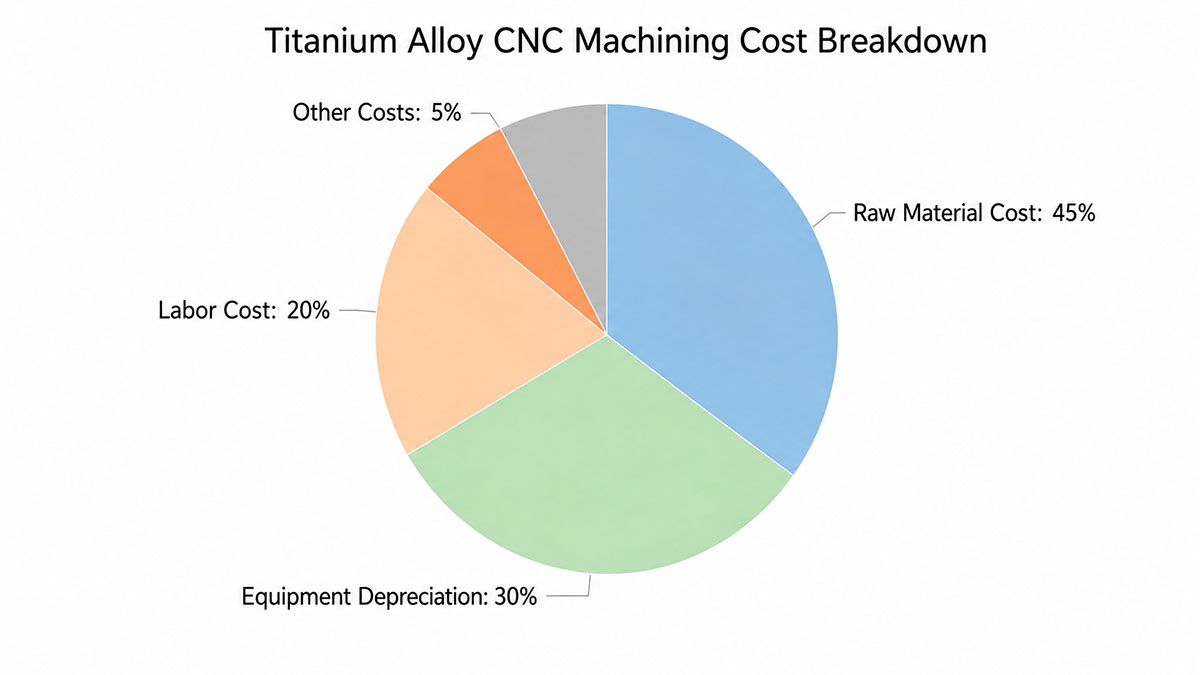
The cost of titanium machining is not driven by a single factor. Instead, it is a combination of material expenses, tooling costs, machine time, labor, and quality control requirements.
The typical cost structure includes:
Raw Material Costs
Titanium alloys are significantly more expensive than aluminum and carbon steel. Material waste during machining further increases costs.
Cutting Tool Costs
Because titanium rapidly wears tools, manufacturers consume a large number of:
Carbide end mills
Inserts
Drills
Reamers
Special coatings
Tooling often becomes one of the highest operational expenses.
Machine and Labor Costs
Titanium machining requires:
High-rigidity CNC equipment
Experienced operators
Longer cycle times
More process monitoring
All these factors increase production costs.
Inspection and Quality Assurance
Titanium components are commonly used in critical applications such as aerospace and medical devices, requiring:
Tight tolerances
Surface integrity inspections
Dimensional verification
Material traceability
Non-destructive testing
Quality assurance is therefore not optional—it is an essential cost component.
In short:
Raw materials account for the largest portion of costs, cutting tools are major cost drivers, machine and labor expenses form the operational foundation, and strict quality control is the minimum requirement for high-performance titanium components.
3. How HuaZheng Reduces Titanium Machining Costs Through Process Optimization
Reducing costs is not about lowering prices. It is about improving efficiency while maintaining precision and yield.
The real goal is:
Higher productivity + Lower tool consumption + Less scrap + Stable quality.
Programming and Toolpath Optimization
Efficient programming can significantly reduce unnecessary machining time.
Our strategies include:
CAM simulation for complex surfaces and deep cavities
Collision avoidance and air-cut reduction
Internal features machined before external features
Roughing followed by precision finishing
Multiple operations completed in a single setup
Benefits:
Higher first-pass yield
Less rework
Shorter cycle times
Lower hidden manufacturing costs
Cutting Parameter Optimization and Tool Management
Proper cutting strategies dramatically improve tool life.
Best practices include:
Small depth of cut
Appropriate feed rates
High-pressure internal coolant systems
Advanced wear-resistant carbide coatings
Predictive tool life management
Rather than running tools until failure, we establish tool-life databases and replace tools proactively, avoiding catastrophic tool breakage and unnecessary scrap.
Specialized Fixturing for Deformation Control
For thin-wall and precision titanium components, fixturing is critical.
Solutions include:
Custom mandrels
Auxiliary supports
Low-clearance fixtures
Enhanced clamping rigidity
Advantages:
Reduced chatter
Improved dimensional stability
Fewer setups
Higher machining efficiency
The fewer times a component is re-clamped, the more stable the precision and the shorter the production cycle.
Case Study: Titanium Sealing Component for Energy Equipment
Component Specifications:
Wall thickness: 2 mm
Tolerance: ±0.04 mm
Surface roughness: Ra 0.4
Optimization Measures:
Custom mandrel with 0.007 mm clearance
Micro-cutting parameters:
ap = 0.03 mm
f = 0.04 mm/rev
Main and sub-program nesting for efficient groove machining
Results:
Increased production efficiency
Reduced tool consumption
Stable production yield
Improved dimensional consistency
4. How to Select the Right Titanium Alloy for Titanium Castings?
How should you choose among common titanium alloys such as TA2, TA6V/TC4, TA15, Ti-6242, and TA18 in terms of materials and manufacturing processes?
Known as the “Space Metal” and “Marine Metal,” titanium alloys have become critical materials in high-end industries including aerospace, automotive manufacturing, medical devices, and marine engineering due to their exceptional properties, such as:
Lightweight
High strength
Excellent corrosion resistance
Superior high- and low-temperature performance
Titanium castings are one of the most important forms of titanium alloy applications, and their quality directly determines the reliability and service life of equipment. To produce high-quality titanium castings, material selection and quality inspection are equally essential.
Since titanium alloys vary significantly in composition and performance, selecting the wrong grade can result in poor performance or even serious safety risks. Choosing the right titanium alloy for the application means you are already halfway to success.
Three Core Principles for Titanium Alloy Selection
1. Selecting the Right Titanium Alloy Grade
TA2 (Commercially Pure Titanium)
Excellent ductility and weldability
Outstanding corrosion resistance
Suitable for general corrosion-resistant structural components
TA6V / TC4 (Ti-6Al-4V)
Classic α+β titanium alloy
High strength, excellent fatigue resistance, and corrosion resistance
Preferred material for critical aerospace load-bearing components
Ti-6242 (Ti-6Al-2Sn-4Zr-2Mo)
Exceptional high-temperature performance
Specifically designed for compressor disks, blades, and other high-temperature aerospace engine components
2. Strict Control of Material Purity
Impurities such as iron (Fe), oxygen (O), nitrogen (N), and hydrogen (H) are the hidden enemies of titanium alloys.
Industry standards generally require:
Total impurity content < 0.1%
This helps prevent:
Embrittlement
Cracking
Corrosion failure
Reduced service life
3. Match Materials with Manufacturing Processes and Service Conditions
Material selection should comprehensively consider:
Strength and toughness requirements
Operating temperatures
Service environment and media
Stress conditions
Manufacturing feasibility
Cost control
Six Essential Inspection Methods for Titanium Castings
Defects are the fatal weakness of cast components. Comprehensive inspection methods are necessary to eliminate potential risks.
① Visual Inspection
Using naked-eye examination and microscopes to identify:
Surface cracks
Cold shuts
Depressions
Dimensional deviations
Macro and micro defects
② X-Ray Inspection
Provides internal imaging of castings to accurately detect:
Porosity
Inclusions
Shrinkage cavities
Internal cracks
This method is essential for complex cast components.
③ Ultrasonic Testing (UT)
Fast inspection speed
High sensitivity
Particularly effective in detecting volumetric defects and cracks
Ideal for batch inspection
④ Penetrant Testing (PT)
Color or fluorescent penetrant methods are used to identify:
Surface cracks
Pinholes
Open defects
Advantages:
Simple operation
High detection efficiency
⑤ Coating Inspection
Evaluates:
Coating adhesion
Thickness
Uniformity
Ensures long-term corrosion protection performance.
⑥ Mechanical and Physical Property Testing
Comprehensive verification includes:
Tensile testing
Impact testing
Hardness testing
Chemical composition analysis
Metallographic examination
These tests ensure compliance with design specifications and industry standards.
As the "Space Metal" and "Marine Metal," titanium alloys have become indispensable materials in aerospace, automotive, medical, and marine industries because of their lightweight, high strength, corrosion resistance, and outstanding temperature performance.
5. Aerospace's Two Flagship Titanium Alloys: TC4 vs TA15 – Which One Should You Choose?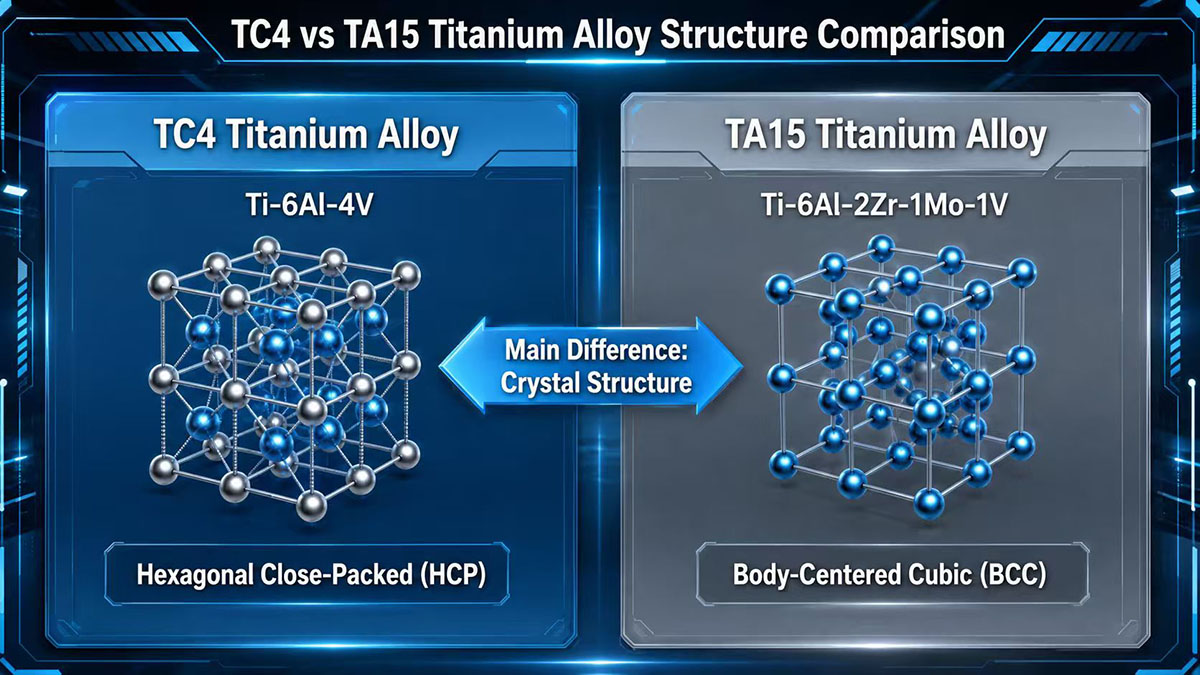
Among all titanium alloys, TC4 and TA15 are the two most popular choices in high-end manufacturing.
One is the all-round champion, while the other is the high-temperature king.
This guide explains their composition, properties, applications, and selection criteria.
1. What Are TC4 and TA15?
TC4: The All-Round Titanium Alloy
Type: α+β Titanium Alloy
Composition: Ti-6Al-4V
Status: The world's most widely used titanium alloy with the highest production volume.
TA15: The Heat-Resistant Champion
Type: Near-α Titanium Alloy
Composition: Ti-6.5Al-1Mo-1V-2Zr
Features:
High aluminum solid-solution strengthening
Optimized with zirconium, molybdenum, and vanadium
Excellent heat resistance, weldability, and ductility
2. Performance Comparison
Strength and Toughness
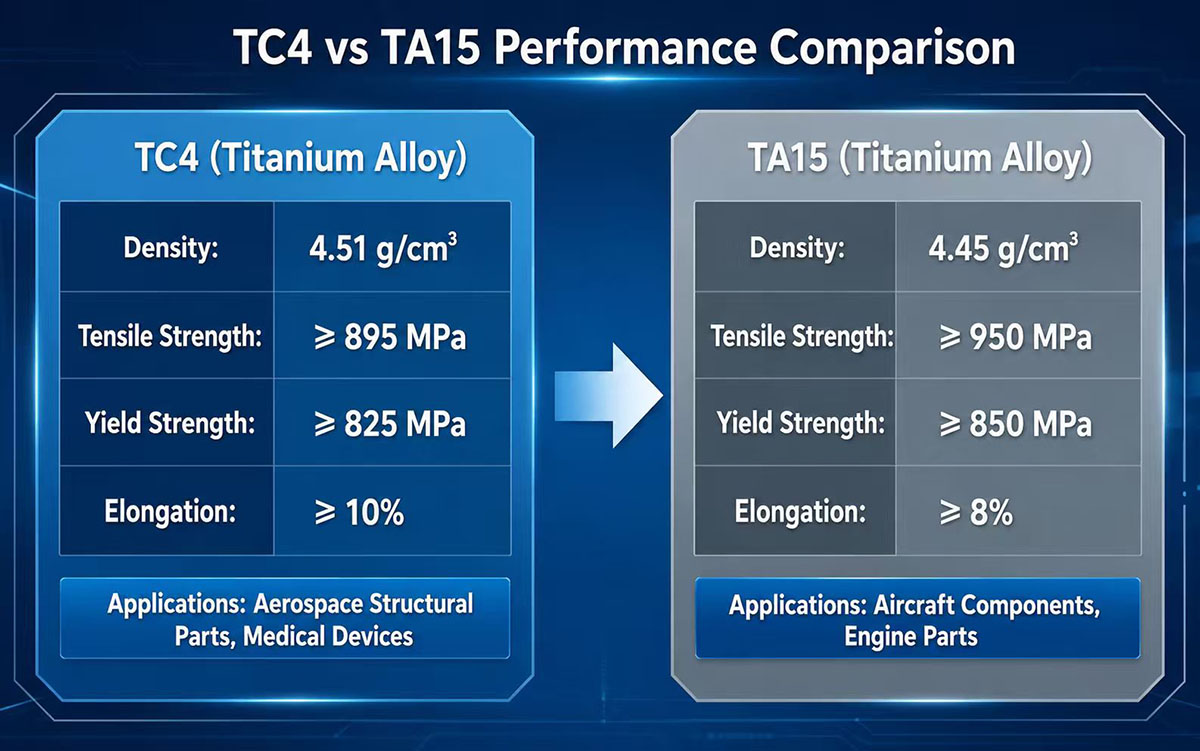
TC4
Tensile strength ≥ 1000 MPa
Excellent balance of strength and toughness
Outstanding fatigue resistance
TA15
Comparable room-temperature strength
Superior strength retention at elevated temperatures
Outstanding high-temperature performance
Heat Resistance (The Biggest Difference)
TC4
Suitable for applications below:
400°C
Long-term exposure to higher temperatures may degrade performance.
TA15
Continuous operation at 500°C for up to 3,000 hours
Instantaneous temperature resistance up to 800°C
Service life of approximately 6,000 hours at 450°C
Ideal for extreme-temperature applications.
Corrosion and Oxidation Resistance
Both alloys offer excellent resistance to:
Seawater
Acidic environments
Alkaline environments
However, TA15 exhibits superior oxidation resistance at high temperatures.
Machining and Welding
TC4
Easy to mill, cut, and weld
Highly versatile
TA15
Excellent weldability
Stable forming characteristics
Suitable for large welded load-bearing structures
Unique Advantages
TC4
Excellent biocompatibility, making it ideal for:
Orthopedic implants
Medical devices
TA15
Exceptional thermal strength, making it the preferred material for:
High-temperature aerospace structures
Aircraft engine components
3. Typical Applications
TC4 Applications
Aerospace
Aircraft skins
Wing beams
Fasteners
Compressor disks
Medical Industry
Artificial joints
Bone screws
Implantable devices
Industrial Applications
Corrosion-resistant structures
High-end sporting equipment
Chemical processing equipment
TA15 Applications
Aerospace
Welded load-bearing aircraft frames
High-temperature engine liners
Missile and rocket thermal structures
New Energy Industry
Geothermal equipment
Nuclear power heat exchangers
Long-life corrosion-resistant pipelines
Low-Altitude Economy
Manned aircraft blades
High-altitude continuous-operation components
6. TA18 Titanium Alloy: A Premium Material for Aerospace and Medical Applications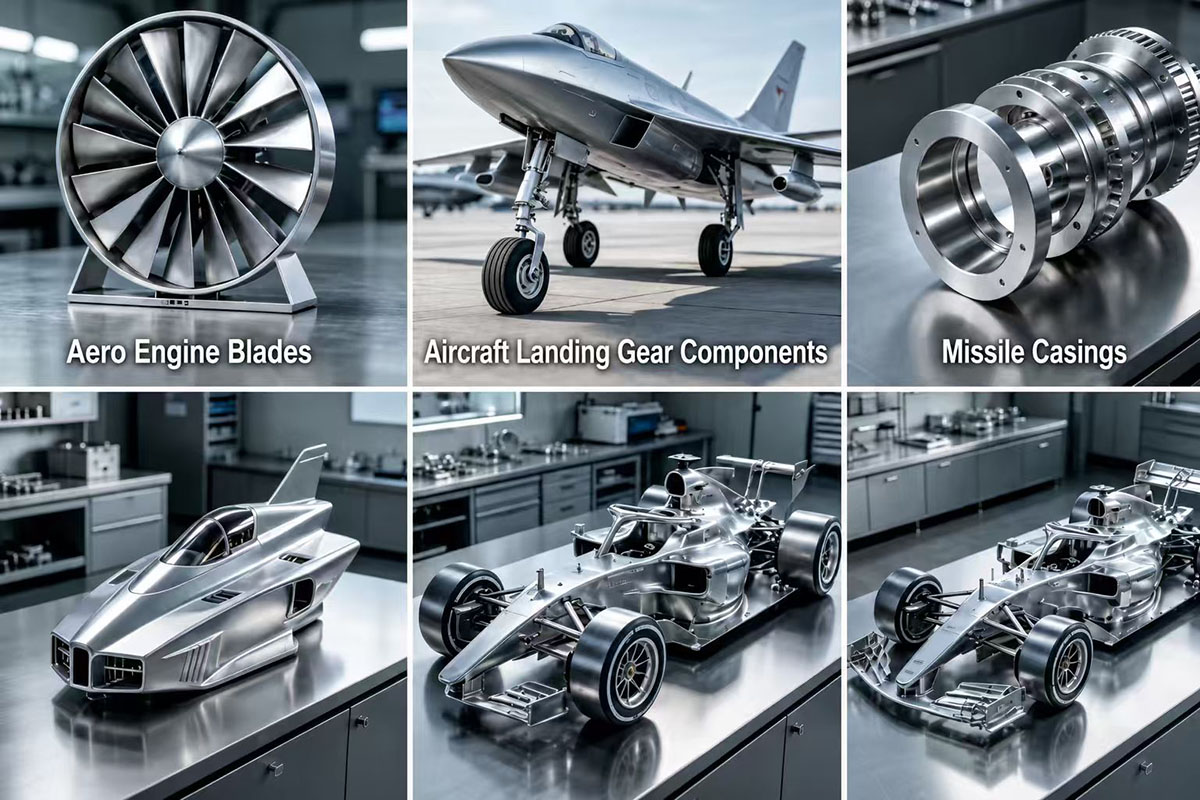
In aerospace and medical industries, every breakthrough in material performance pushes technology forward.
TA18 titanium alloy has become the preferred material for critical components due to its:
High strength
Excellent toughness
Superior corrosion resistance
Outstanding thermal stability
However, many people overlook one fact:
Poor processing can reduce material performance by half.
This guide explains the manufacturing essentials of TA18 titanium alloy.
1. Mechanical Properties of TA18
Yield Strength
950–1050 MPa
Tensile Strength
1100–1200 MPa
Elongation
12%
Average Hardness After Heat Treatment
≈300 HV (ASTM B348 compliant)
High-Temperature Performance
According to AMS4985, TA18 demonstrates significantly better oxidation resistance and elevated-temperature performance than conventional titanium alloys and even surpasses TC4 in certain high-temperature applications.
In one sentence:
Strong but not brittle, tough, corrosion-resistant, and highly durable at elevated temperatures.
 2. The Secret Behind Its Performance: α+β Dual-Phase Structure
TA18 is a typical α+β titanium alloy.
β Phase
Provides:
Strength
Toughness
Dual-Phase Structure
Offers:
Excellent castability
Good machinability
Suitability for complex and high-precision components
Proper heat treatment further:
Refines grain structure
Eliminates residual stress
Improves hardness and strength
Enhances reliability and service life
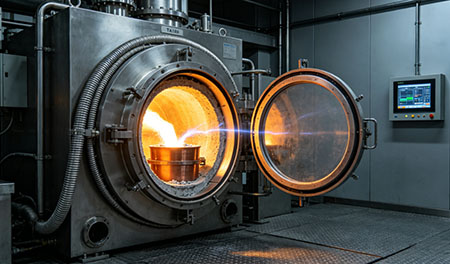
3. Three Manufacturing Methods for TA18
① Arc Melting
Advantages:
High purity
Low porosity
Minimal defects
Disadvantages:
High cost
Limited production capacity
Applications:
High-end, small-batch critical components
② Precision Casting
Advantages:
Suitable for complex geometries
Near-net-shape manufacturing
Disadvantages:
Strict defect and composition control requirements
Applications:
Complex and special-shaped components
③ Thermomechanical Processing
Advantages:
Refined grains
Dense microstructure
Superior strength and toughness
Disadvantages:
Complex process control
Strict temperature and deformation requirements
Applications:
Critical load-bearing components with extreme mechanical requirements
Quick Selection Guide
Complex geometries → Precision Casting
Maximum purity → Arc Melting
Maximum strength and toughness → Thermomechanical Processing
4. Three Common Selection Mistakes
Mistake 1: Using Low-Grade Aluminum Alloys as Substitutes
May cause:
Insufficient strength
Poor corrosion resistance
Deformation and fracture risks
Mistake 2: Skipping Heat Treatment
Without proper heat treatment:
Strength
Hardness
Toughness
may fail to meet specifications.
Mistake 3: Ignoring Material Purity
Impurities can cause:
Porosity
Cracking
Reduced mechanical performance
Poor corrosion resistance
Bottom line:
High-purity raw materials, precise processing, and proper heat treatment are all indispensable.
7. Huazheng's Comprehensive Guide to Titanium Alloy Plastic Forming Technologies
Titanium and titanium alloys have become indispensable materials in aerospace, petrochemical, biomedical, and defense industries due to their:
Low density
High specific strength
Excellent corrosion resistance
Superior biocompatibility
However, challenges such as difficult forming, cracking susceptibility, and demanding processing requirements continue to limit manufacturing efficiency.
Plastic forming technologies provide the key to overcoming these challenges.
Why Is Titanium Alloy Plastic Forming So Difficult?
During plastic deformation, titanium alloys often experience:
Increased strength and hardness
Reduced ductility and toughness
Surface cracking
Oxidation
Poor surface finish
Choosing the right forming process directly determines product quality.
Traditional Plastic Forming Processes
① Forging
Forging improves:
Grain density
Mechanical properties
Surface quality
Internal purity
Advantages:
Excellent material uniformity
High performance
Disadvantages:
Low productivity
Difficult process control
Poor suitability for highly complex geometries
② Rolling
The primary process for producing:
Titanium plates
Bars
Tubes
Includes:
Hot rolling: removes defects and enables large deformation
Cold rolling: improves strength and surface finish
Advantages:
Higher efficiency than forging
Lower production cost
High dimensional accuracy
Suitable for mass production
③ Extrusion
Applies triaxial compressive stress to achieve significant deformation.
Advantages:
Broad applicability
Simplified process flow
Flexible production
Suitable for dissimilar metal joining
Key parameters:
Temperature
Extrusion speed
Lubrication
Glass lubricants are commonly used, and extrusion speed is generally controlled below:
200 mm/s
Challenges:
Temperature rise
High deformation resistance
Die sticking
Advanced Forming Technologies
① Superplastic Forming (SPF)
Titanium alloys exhibit superplasticity under specific conditions, enabling:
Large deformation
Low stress forming
Necking-free deformation
Advantages:
Lower manufacturing cost
Higher efficiency
Excellent for complex components
Applications:
Aerospace titanium structures
② SPF/DB (Superplastic Forming/Diffusion Bonding)
Performs forming and bonding simultaneously.
Advantages:
One-step manufacturing of integral structures
Lower production cost
No cracking
Minimal residual stress
Excellent fatigue and corrosion resistance
Applications:
High-end aerospace structures
③ Incremental Forming
An emerging green manufacturing technology that offers:
Reduced tooling requirements
Lower energy consumption
Lightweight and precision manufacturing capabilities
This technology is still undergoing continuous development and optimization.
8. How to Choose a Titanium Alloy Machining Outsourcing Partner?
Selecting the right manufacturing partner can reduce costs by up to 30% while ensuring stable delivery schedules.
1. Equipment and Inspection Capabilities
Look for:
High-rigidity machine tools
Multi-axis machining centers
Coordinate Measuring Machines (CMM)
Surface roughness testers
Precision starts with equipment.
2. Process Experience
Review previous projects in:
Aerospace
Medical
Energy industries
Understanding titanium alloys is not the same as mastering titanium machining.
3. Supply Chain and Cost Management
A reliable supplier should have:
Stable raw material sources
Competitive purchasing capabilities
Standardized tool management
This ensures fair pricing and stable production.
4. Quality Management System
A complete process should include:
Drawing Review → Process Planning → Trial Cutting → Full Inspection → Delivery
A closed-loop quality system prevents costly failures.
Huazheng – Your Trusted Partner for Titanium CNC Machining
Phone: +86 13421341931
Email: info@huazhengmodel.com


