



If you are new to the manufacturing industry, you may be wondering which machine is ideal for the precision machining of mechanical parts. One of the most commonly used machine tools in modern manufacturing is the grinding machine. Although you may have heard of grinding machines before, you may not know exactly how they work or what applications they are used for. In this article, we will take a closer look at the principles, types, and applications of grinding machines, helping you gain a better understanding of their importance in precision manufacturing.
WHAT IS A GRINDING MACHINE?
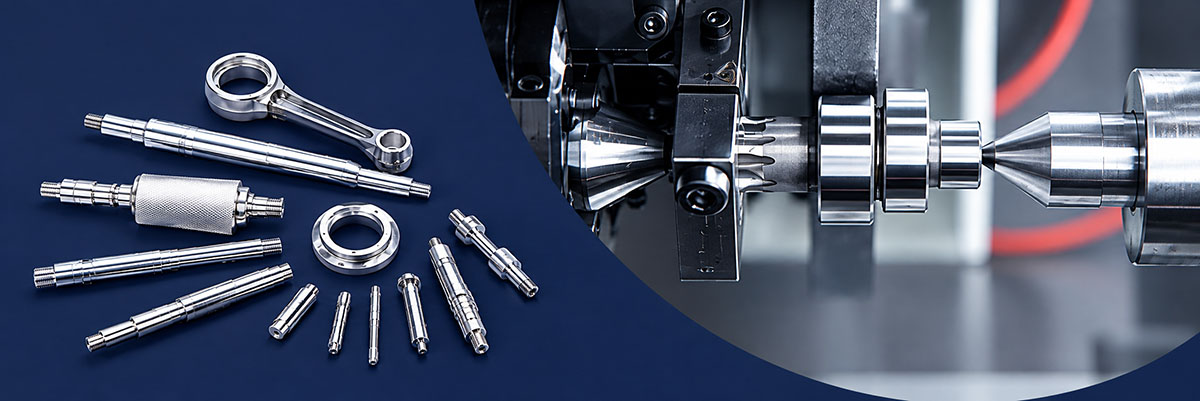
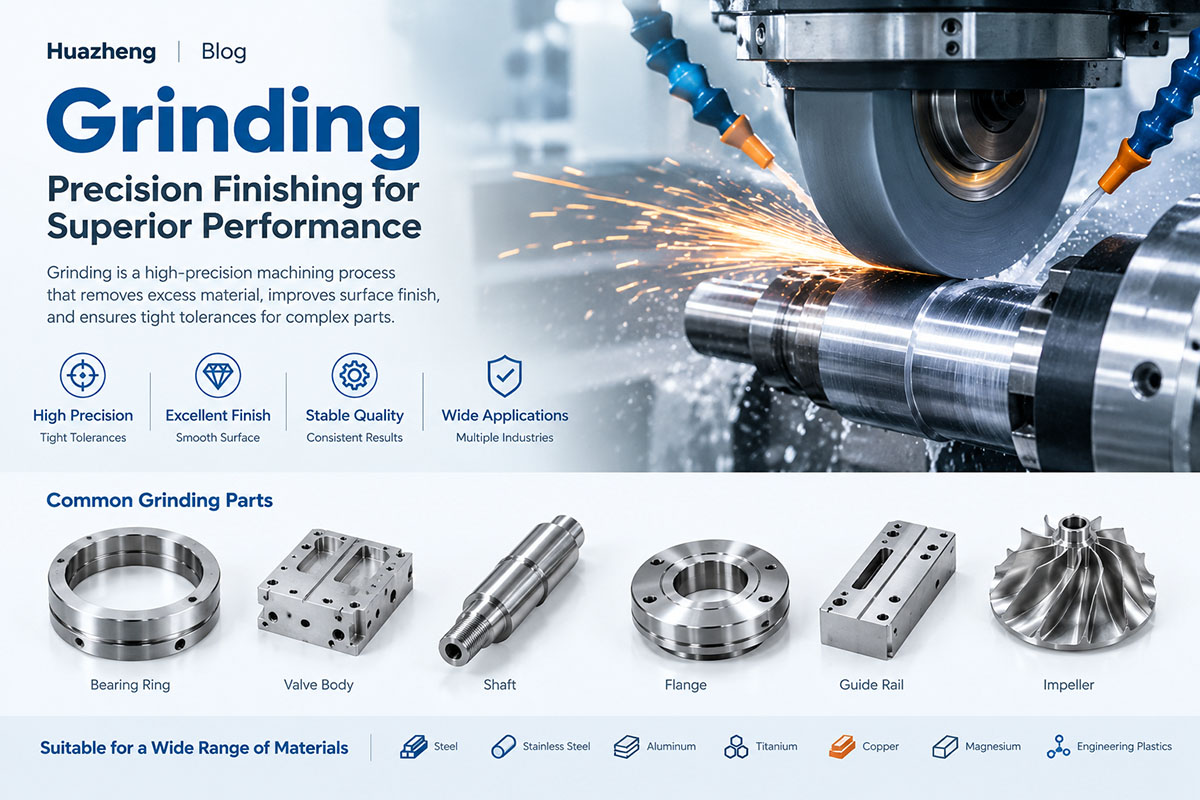
Similar to using sandpaper to smooth and refine wood or stone, a grinding machine is a specialized machine tool widely used in the manufacturing industry. It is mainly used to improve the surface finish and dimensional accuracy of manufactured parts. A grinding machine removes small amounts of excess material from the workpiece by using a high-speed rotating grinding wheel, allowing components to achieve precise dimensions and a smoother surface. As a result, grinding machines are an essential part of modern manufacturing and help maintain the quality and consistency of finished products.
COMMON TYPES OF GRINDING MACHINES
In modern manufacturing, grinding machines are widely used for high-precision machining and finishing of mechanical parts. Different grinding machines are designed to handle specific workpiece shapes, sizes, and machining requirements. In this section, we will explore six common types of grinding machines, their main features, and typical applications, helping you understand how each type improves machining efficiency and meets different precision machining needs.
1.CYLINDRICAL GRINDING MACHINE
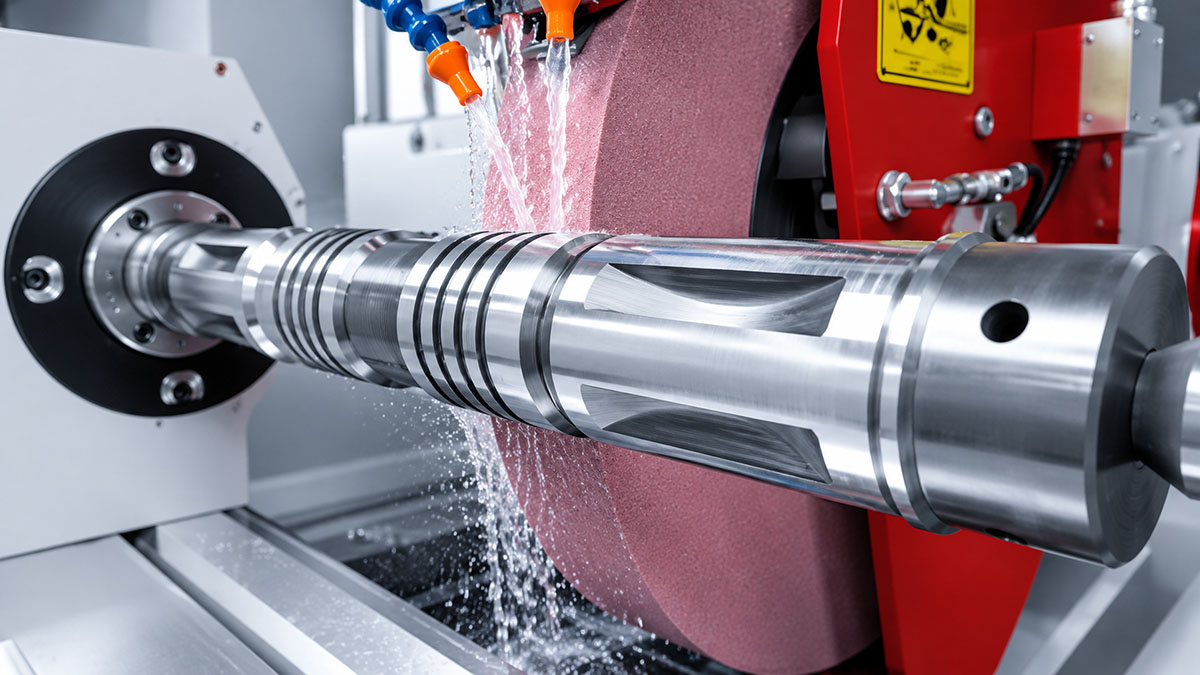
A cylindrical grinding machine is primarily used to grind the outer diameter and end faces of cylindrical workpieces with high precision. It is widely applied to precision components such as cylinders, cones, elliptical parts, cams, and crankshafts. During machining, the workpiece is securely positioned and rotated around its center axis while the grinding wheel removes material from the surface. This process helps achieve high concentricity, dimensional accuracy, and surface quality, making cylindrical grinding suitable for both standard and complex geometries.
2.CENTERLESS GRINDING MACHINE
A centerless grinding machine is known for its high productivity, continuous operation, and suitability for high-volume production. It is widely used to process shaft components in industries such as automotive, electronics, and precision tooling. Unlike cylindrical grinding, centerless grinding does not require center holes to position the workpiece. Instead, the grinding wheel and regulating wheel work together to control the workpiece rotation and feed rate, while the workrest blade supports the workpiece during machining. This process enables precise control of roundness, cylindricity, surface finish, and dimensional accuracy, making centerless grinding suitable for efficient precision machining.
3.INTERNAL GRINDING MACHINE
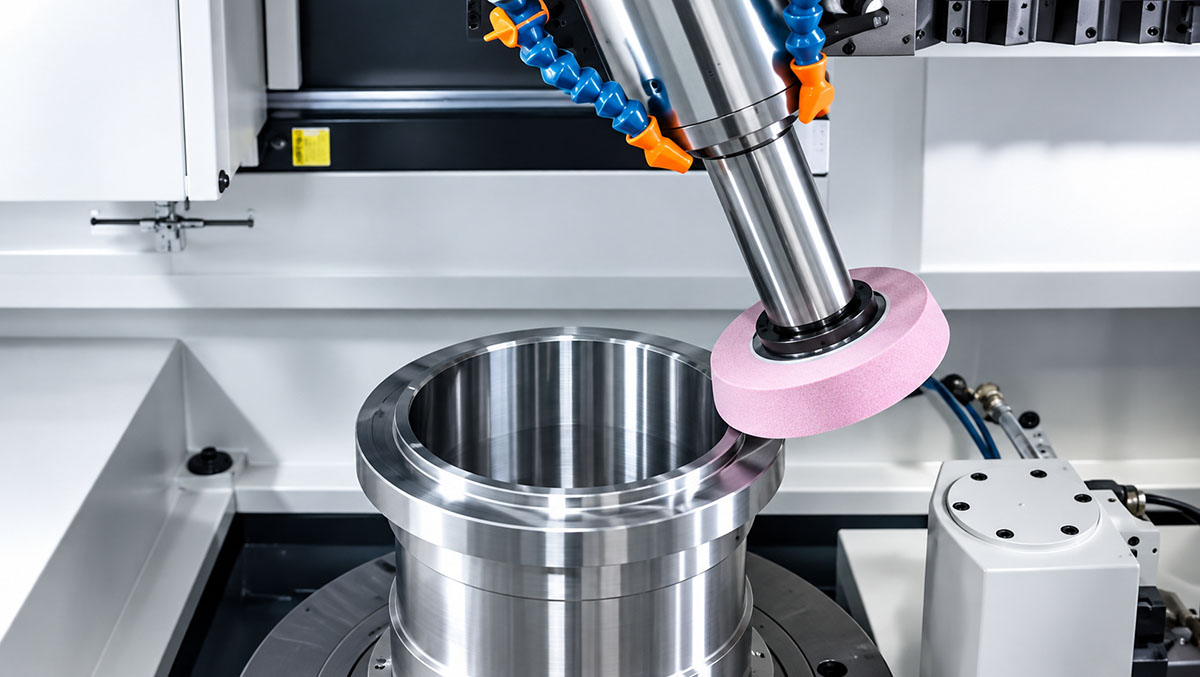
An internal grinding machine is specially designed for precision machining of internal bores and inner surfaces. It uses a small grinding wheel to accurately remove excess material from the inside of a workpiece, achieving the required dimensional accuracy and surface finish for precision assembly. Internal grinding machines are widely used for processing shaft and sleeve components, including tapered holes, through holes, and blind holes, making them suitable for various internal precision machining applications.
4.SURFACE GRINDING MACHINE
A surface grinding machine is mainly used to achieve precise grinding of flat, contoured, and other shaped surfaces. During the grinding process, the workpiece moves back and forth beneath the grinding wheel, while the wheel surface removes a small amount of material to achieve the required surface finish and dimensional accuracy. Surface grinding is widely used for precision components such as molds, gears, and guideways. It can process different surface geometries, including flat, concave, and convex surfaces, while maintaining excellent flatness and tight dimensional tolerances.
5.TOOL GRINDER
A tool and cutter grinder is specially designed for grinding, sharpening, and reconditioning cutting tools, including milling cutters, drills, and other precision tooling. By accurately restoring cutting edges and correcting tool geometry, it helps maintain sharp cutting performance, improve machining accuracy, and extend tool life. As an essential machine for precision machining, a tool grinder helps ensure consistent tool performance and stable manufacturing quality.
Grinding Machine Types Comparison: Applications and Key Differences
Types of Grinding Machines | Main Processing Objects | Processing Features | Common Applications |
Cylindrical Grinding Machine | Cylinders, cones, crankshafts, cams | Workpiece rotates between centers; suitable for high-concentricity and precision external diameter grinding | Shafts, automotive parts, mechanical transmission components |
Centerless Grinding Machine | Long shafts, round bars, small shaft components | No center positioning required; enables continuous, high-efficiency, high-volume production | Automotive parts, electronic components, precision mold parts |
Internal Grinding Machine | Internal bores, rings, through holes, blind holes | Uses small grinding wheels for internal bore grinding; improves bore accuracy and surface finish | Bearing rings, precision sleeves, mechanical inner-hole components |
Vertical Grinding Machine | Large, heavy, and irregularly shaped workpieces | Vertical structure reduces the impact of workpiece weight; suitable for inner holes, outer diameters, and face grinding | Large mechanical parts, heavy-duty industrial components, special-shaped workpieces |
Surface Grinding Machine | Flat, concave, convex, and profiled surfaces | Reciprocating movement of the grinding wheel and worktable improves surface flatness and dimensional accuracy | Molds, gears, guide rails, mechanical reference surfaces |
Tool Grinder | Milling cutters, drill bits, cutting tools | Precisely grinds cutting edges and tool geometries to restore performance and extend tool life | Tool maintenance, precision machining, mold manufacturing |
WHERE ARE GRINDING MACHINES USED?
Grinding machines are widely used across the manufacturing industry, especially when components require high dimensional accuracy, fine surface finish, and reliable assembly quality. Grinding processes help reduce surface roughness, maintain consistent dimensions, and minimize friction and wear during operation. From large industrial components to small precision parts, grinding machines support a wide range of manufacturing applications. They are commonly used in industries such as aerospace, automotive, medical equipment, precision hardware, communication equipment, and machinery manufacturing, helping improve product quality and overall process stability.
1.AEROSPACE INDUSTRY
In the aerospace industry, grinding machines are widely used to manufacture aircraft engine components, precision parts, and lightweight structural components. These parts often require tight dimensional tolerances, excellent surface quality, and consistent machining performance. Grinding processes help achieve the high precision and quality standards required for reliable aerospace component manufacturing.
2.AUTOMOTIVE INDUSTRY
In the automotive industry, precision components such as crankshafts and camshafts used in engines and transmission systems require extremely high precision. Accurate component fit is essential for stable engine operation. Grinding processes help these components achieve the required dimensional accuracy and surface finish, supporting consistent component quality and reliability in automotive manufacturing.
3.MEDICAL DEVICE INDUSTRY
In the medical device industry, precision and surface quality are essential, particularly for artificial joints, implants, and other implantable components. A high-quality surface finish can help support biocompatibility, reduce friction, and minimize potential tissue irritation. Grinding machines provide high machining accuracy and consistent surface quality, helping meet the medical industry's strict requirements for geometric accuracy, dimensional tolerances, and surface finish.
4.HARDWARE, MECHANICAL & ELECTRONICS INDUSTRY
In the hardware, mechanical, and electronics industries, components often feature complex geometries and are manufactured from materials with different hardness levels, including both metals and non-metals. Many of these parts require grinding processes to achieve the required dimensional accuracy and surface finish. Grinding machines can effectively process complex shapes while producing smooth and flat surfaces, helping reduce friction and wear between mating components and extend product service life.
GRINDING MACHINE SOLUTIONS FOR HIGHER EFFICIENCY AND PRECISION
Taiwan's manufacturing industry is widely recognized for its strong capabilities in precision engineering and advanced manufacturing. As an important machine tool in modern production, grinding machines continue to support improvements in machining efficiency, accuracy, and surface quality. For manufacturers looking to increase productivity while maintaining strict precision requirements, grinding machines offer reliable solutions for achieving consistent grinding performance, dimensional accuracy, and surface finish.
Based on different machining processes and application requirements, grinding machines are available in several types, including cylindrical grinding machines, centerless grinding machines, internal grinding machines, vertical grinding machines, tool and cutter grinders, and surface grinding machines. Each type is designed for specific workpiece characteristics and machining requirements, helping manufacturers achieve efficient and precise grinding results.
WHAT GRINDING MACHINES DOES HUAZHENG PRECISION SUPPLY?
According to HUAZHENG PRECISION product pages, its grinding machines are organized into three main product lines:
Cylindrical Grinder – The T Series and OGC Series feature a T-shaped slider design, also known as a traditional separate or moving-table configuration. The main difference is that the T Series uses 2-axis NC control, while the OGC Series uses 2-axis CNC control.
Cylindrical Grinder (Cross-Slider) – The X Series includes several configurations, such as plunge type, linear motor cross-slider, angular wheel head, non-circular grinding, and angular plunge grinding, with the corresponding codes X, X-LM, X-P, X-CAM, and X-A. The cross-slider design is also one of TOPKING's widely used product configurations.
Centerless Grinder – The H Series offers both NC and CNC control options, providing different configurations for centerless grinding applications.
Grinding Frequently Asked Questions (FAQ)
1. What is grinding in machining?
Grinding is a precision machining process that uses an abrasive grinding wheel to remove small amounts of material from a workpiece. It is mainly used to achieve high dimensional accuracy, tight tolerances, and fine surface finishes.
2. What types of grinding does Huazheng Precision provide?
Huazheng Precision can support various grinding processes, including cylindrical grinding, centerless grinding, internal grinding, surface grinding, and tool grinding, depending on the part geometry and machining requirements.
3. What materials can be grinding machined?
Grinding can be applied to many metals and engineering materials, including stainless steel, titanium alloys, aluminum alloys, alloy steel, hardened steel, and other precision materials. The appropriate grinding process depends on the material properties and required finish.
4. What is the difference between cylindrical grinding and centerless grinding?
Cylindrical grinding generally uses a center or fixture to position the workpiece, while centerless grinding supports the workpiece using a regulating wheel and workrest blade without requiring center holes. Centerless grinding is particularly suitable for continuous and high-volume production.
5. What surface finish can grinding achieve?
The achievable surface roughness depends on the material, grinding wheel, machine, process parameters, and finishing requirements. Grinding can generally produce a much finer surface finish than conventional milling or turning.
6. Why is grinding important for precision machining?
Grinding provides precise control over dimensions, tolerances, geometry, and surface finish. It is often used as a finishing process after turning or milling to achieve the final machining requirements.
7. Can Huazheng Precision provide custom grinding services?
Yes. Huazheng Precision can provide customized precision machining and grinding solutions based on 2D drawings, 3D models, samples, material specifications, dimensional tolerances, and surface finish requirements.
Grinding is an essential precision machining process for achieving tight dimensional tolerances, accurate geometries, and high-quality surface finishes. Different grinding methods, including cylindrical grinding, centerless grinding, internal grinding, surface grinding, and tool grinding, can meet the requirements of various workpieces and applications.
At Huazheng Precision, we combine advanced CNC Machining, 5-Axis Machining, grinding, and surface finishing capabilities to provide precision manufacturing solutions for complex components. By selecting the appropriate machining process based on material, geometry, tolerance, and surface finish requirements, we help customers achieve consistent quality and reliable performance.


