



Choosing the right metal material is one of the most important decisions in product design and manufacturing. Magnesium, zinc, aluminum, and titanium alloys are among the most widely used engineering metals, each offering unique advantages in terms of weight, strength, corrosion resistance, machinability, and cost.
Whether you're designing CNC Machined Parts, die-cast components, aerospace structures, medical devices, or consumer electronics, understanding the strengths and applications of these four materials will help you select the most suitable option.
In this guide, we'll compare magnesium vs zinc vs aluminum vs titanium alloys, explore their industrial applications, and provide recommendations for selecting the best material for your project.
Overview of Magnesium, Zinc, Aluminum, and Titanium Alloys
| Material | Density | Strength | CNC Machinability | Cost | Typical Industries |
|---|---|---|---|---|---|
| Magnesium Alloy | Very Low (1.8 g/cm³) | High | Excellent | Medium | Automotive, Aerospace, Electronics |
| Zinc Alloy | High (6.7 g/cm³) | Medium | Good | Low | Hardware, Consumer Goods, Die Casting |
| Aluminum Alloy | Low (2.7 g/cm³) | High | Excellent | Medium | Construction, Transportation, Electronics |
| Titanium Alloy | Medium (4.5 g/cm³) | Very High | Difficult | High | Aerospace, Medical, High-End Manufacturing |
Each alloy serves different manufacturing needs. While aluminum is the most versatile material for CNC machining, magnesium offers superior lightweight performance, zinc excels in precision die casting, and titanium delivers unmatched strength and corrosion resistance.
Magnesium Alloy Applications
Why Choose Magnesium Alloys?
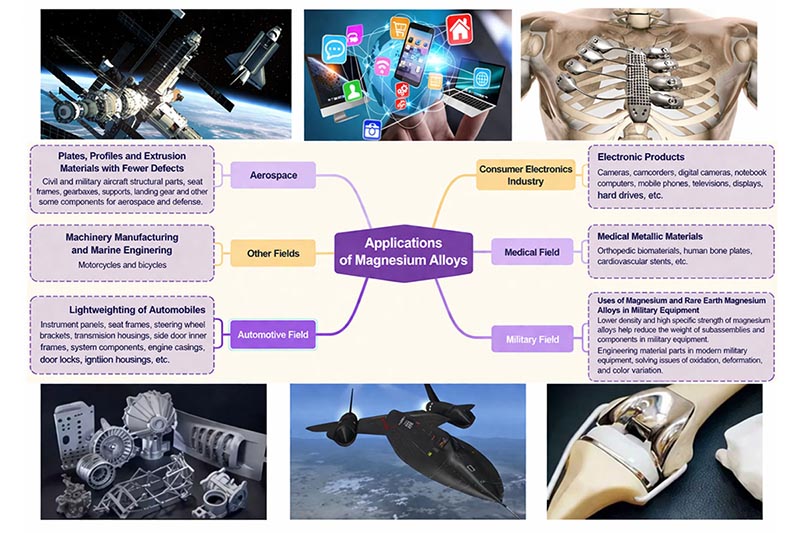
Magnesium alloys are the lightest structural metals available today, weighing approximately 35% less than aluminum and 75% less than steel. They offer an excellent strength-to-weight ratio, outstanding vibration damping, and excellent machinability.
Key Advantages
Extremely lightweight
High specific strength
Excellent vibration absorption
Superior machinability
Ideal for lightweight product design
 Major Industries Using Magnesium Alloys
Automotive Industry
Weight reduction is a top priority for modern vehicles, especially electric vehicles (EVs). Magnesium alloys help improve fuel efficiency and extend battery range.
Typical applications include:
Steering wheel frames
Instrument panel supports
Seat frames
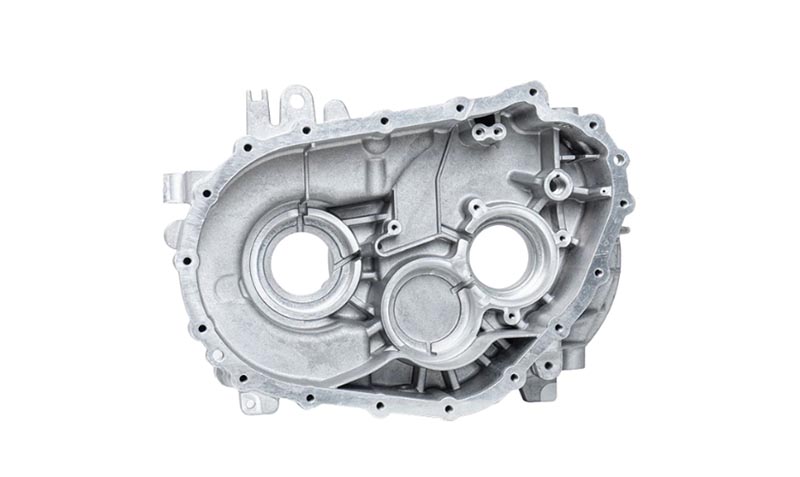
Transmission housings
Interior structural components
Consumer Electronics
The electronics industry values magnesium for its lightweight properties and structural rigidity.
Common products include:
Laptop housings
Tablet frames
Smartphone mid-frames
Camera bodies
Drone components
Aerospace & Defense
In aerospace, every gram matters. Magnesium alloys are widely used for non-critical structural components requiring minimal weight.
Typical applications include:
Aircraft interior structures
Missile housings
Helicopter transmission components
Radar equipment enclosures
Zinc Alloy Applications
Why Choose Zinc Alloys?
Zinc alloys have excellent casting characteristics thanks to their low melting point and exceptional fluidity. They are widely used in high-pressure die casting to produce complex, high-precision components with excellent surface quality.
Key Advantages
Excellent die-casting performance
High dimensional accuracy
Outstanding surface finish
Easy electroplating and painting
Cost-effective for mass production
Major Industries Using Zinc Alloys
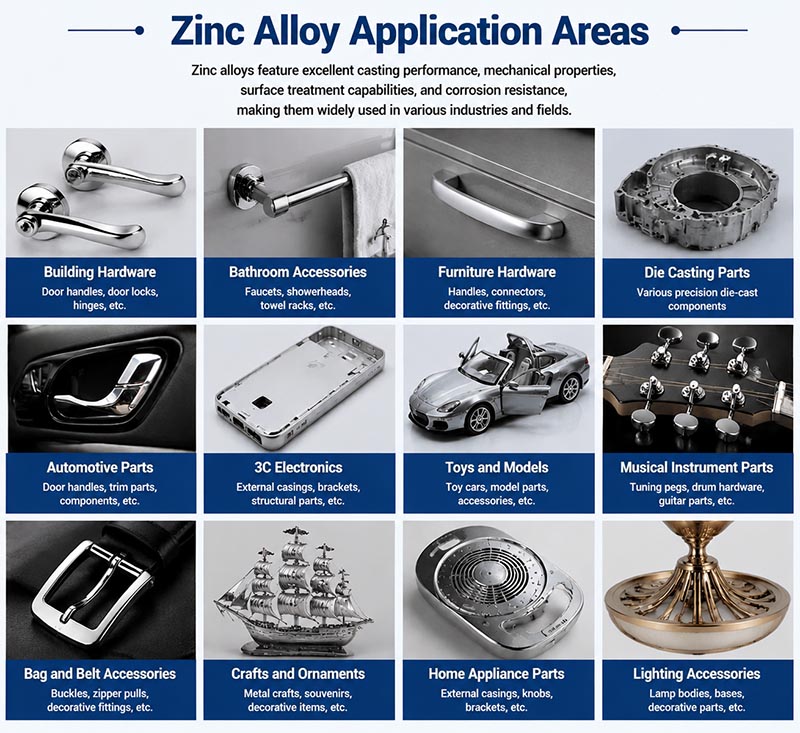
Hardware & Building Products
Zinc alloys are commonly used in architectural hardware because of their durability and decorative finish.
Typical products include:
Door handles
Locks
Hinges
Bathroom fixtures
Furniture hardware
Fashion & Decorative Products
The ability to produce intricate shapes makes zinc alloys popular in decorative industries.
Applications include:
Belt buckles
Zipper pulls
Medals
Badges
Decorative accessories
Precision Components
Manufacturers also use zinc alloys for small precision parts such as:
Miniature gears
Electrical housings
Toy components
Mechanical connectors
Instrument parts
Aluminum Alloy Applications
Why Choose Aluminum Alloys?
Aluminum alloys are the most widely used lightweight engineering materials worldwide. They offer an excellent balance between strength, corrosion resistance, machinability, and cost.
For CNC machining, aluminum remains the preferred choice across countless industries.
Key Advantages
Excellent CNC machinability
High strength-to-weight ratio
Good corrosion resistance
Easy welding and fabrication
Cost-effective
Recyclable
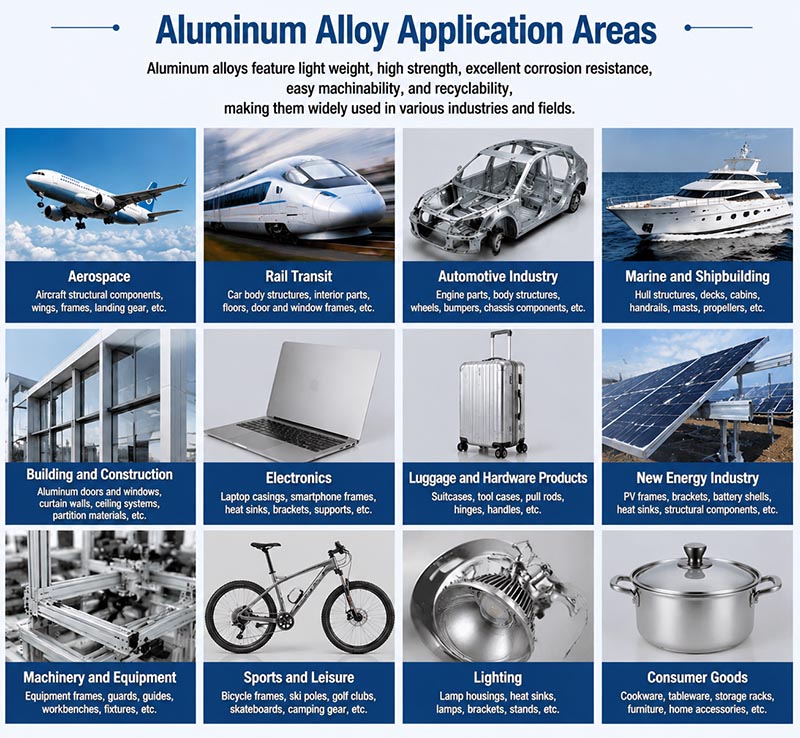 Major Industries Using Aluminum Alloys
Construction Industry
Architectural aluminum provides excellent durability while reducing structural weight.
Common applications include:
Window frames
Curtain walls
Roofing systems
Structural profiles
Decorative panels
Automotive & Transportation
Lightweight aluminum helps reduce fuel consumption and improve vehicle performance.
Applications include:
Vehicle body panels
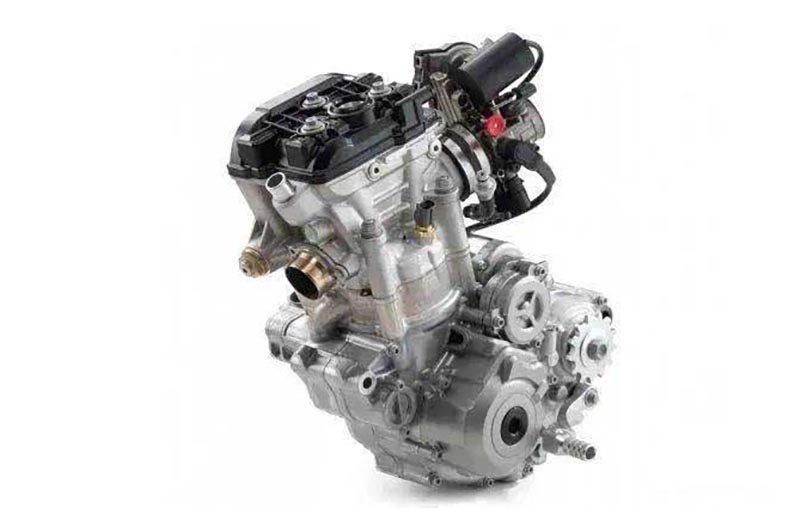
Engine blocks
EV battery housings
Railway carriages
Aircraft skins
Marine structures
Consumer Electronics & Packaging
Aluminum has become the standard material for premium consumer products.
Typical applications include:
Smartphone housings
Laptop enclosures
Tablets
Beverage cans
Aluminum foil
Premium luggage
Titanium Alloy Applications
Why Choose Titanium Alloys?
Titanium alloys combine exceptional mechanical strength with outstanding corrosion resistance and excellent biocompatibility. Although Machining Titanium is more challenging and expensive, it remains the preferred material for demanding applications.
Key Advantages
Extremely high strength
Excellent corrosion resistance
High-temperature resistance
Outstanding fatigue performance
Biocompatible
Long service life
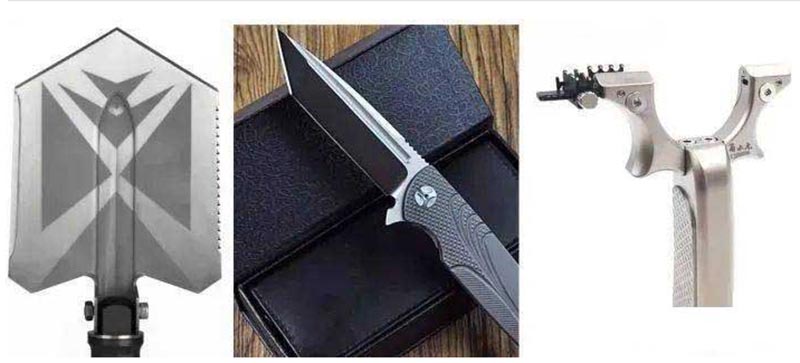
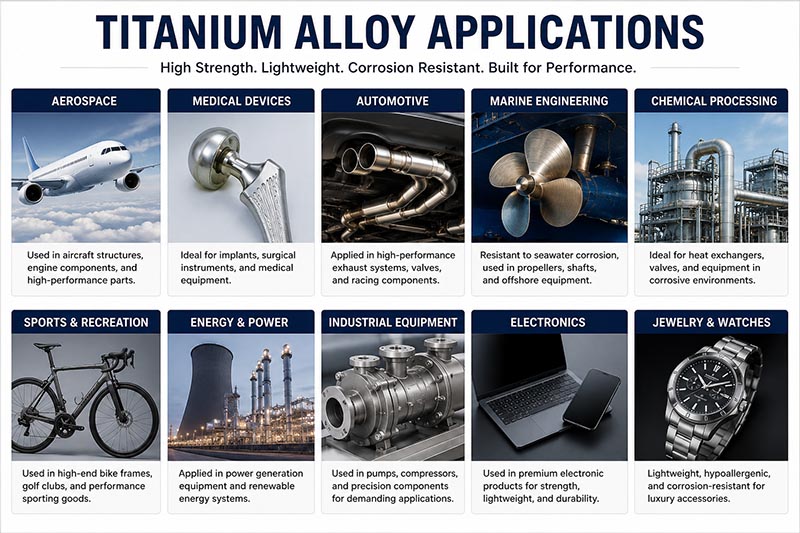 Major Industries Using Titanium Alloys
Aerospace Industry
Titanium alloys are essential for aircraft and spacecraft where both strength and weight are critical.
Typical applications include:
Aircraft landing gear
Jet engine compressor blades
Rocket pressure vessels
Structural airframe components
Fasteners
Medical Industry
Because titanium is biocompatible and corrosion-resistant, it is widely used for permanent implants.
Applications include:
Artificial joints
Bone plates
Orthopedic screws
Dental implants
Surgical instruments
Premium Consumer Products
Titanium has become increasingly popular in high-end consumer products because of its premium appearance and durability.
Applications include:
Smartphone frames
Luxury watches
Eyeglass frames
Golf clubs
Outdoor equipment
Industry Comparison: Which Alloy Fits Your Application?
| Industry | Recommended Material | Primary Reason |
|---|---|---|
| Automotive | Magnesium / Aluminum | Lightweight and fuel efficiency |
| Aerospace | Titanium / Magnesium | High strength and weight reduction |
| Medical Devices | Titanium | Biocompatibility and corrosion resistance |
| Consumer Electronics | Magnesium / Aluminum | Lightweight with premium appearance |
| Construction | Aluminum | Corrosion resistance and affordability |
| Hardware & Decorative Products | Zinc | Excellent die-casting capability |
| Precision CNC Machining | Aluminum | Easy machining and stable performance |
How to Choose the Right Alloy for Your Project
When selecting a metal alloy, consider the following factors:
Choose Magnesium Alloy If You Need:
Maximum weight reduction
Excellent vibration damping
Lightweight automotive or electronic components
Choose Zinc Alloy If You Need:
Complex die-cast parts
High-volume production
Decorative surface finishes
Low manufacturing cost
Choose Aluminum Alloy If You Need:
Excellent CNC machining performance
Balanced mechanical properties
Cost-effective production
Wide material availability
Choose Titanium Alloy If You Need:
Maximum strength
Superior corrosion resistance
Medical-grade materials
Aerospace performance
Long-term durability
CNC Machining Considerations
Different alloys require different machining strategies.
Magnesium alloys are easy to machine but require proper chip management due to their flammability.
Zinc alloys are primarily manufactured through die casting, with CNC machining used for secondary operations.
Aluminum alloys offer the highest machining efficiency, making them the most popular choice for precision CNC machining.
Titanium alloys require specialized tooling, slower cutting speeds, and advanced cooling systems because of their high strength and low thermal conductivity.
Selecting the right machining process is just as important as selecting the right material.
Partner with Huazheng for Precision Metal Machining
At Huazheng, we provide one-stop manufacturing solutions for magnesium, zinc, aluminum, and titanium alloy components. From material selection and design optimization to precision CNC machining and surface finishing, our experienced engineering team ensures every part meets your quality and performance requirements.
Our capabilities include:
Precision CNC Milling and turning
3-axis, 4-axis, and 5-Axis Machining
Prototype to mass production
Surface treatments and assembly
Strict quality inspection
Fast lead times and global delivery
Whether you're developing aerospace components, automotive parts, medical devices, or consumer electronics, Huazheng can help you choose the right material and manufacturing process to achieve the best balance of performance, quality, and cost.
Contact our engineering team today to discuss your project and receive professional recommendations tailored to your application.


