



What Is silver plating?
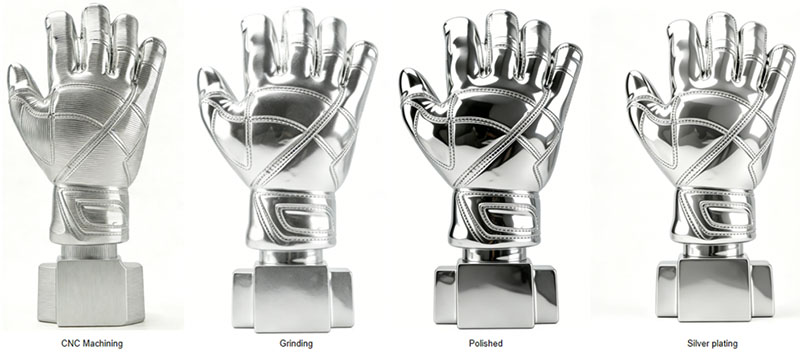
Silver plating is a surface treatment process that deposits a layer of silver onto the surface of a substrate; it is a type of metal coating technology.
Foreign Name | Silver Plating |
Discipline Category | Materials Science, Surface Engineering |
Application Fields | Electronics, Aerospace, Jewelry, Medical Devices |
Silver possesses the highest electrical conductivity, thermal conductivity, and optical reflectivity of all metals; consequently, silver plating is widely used in sectors such as electronic communications, aerospace, medical devices, and arts and crafts. Silver plating allows the superior properties of silver to be imparted to the surfaces of lower-cost substrates (such as copper, steel, or plastic), thereby meeting functional requirements—such as high-frequency conductivity and low contact resistance—while also providing an aesthetic finish.
Key silver plating processes include electroplating, electroless plating, and physical vapor deposition (PVD). Among these, electroplating is the most widely used method in industrial production; depending on the plating bath chemistry, it can be categorized into traditional cyanide-based silver plating and eco-friendly cyanide-free silver plating. Since silver is prone to discoloration (sulfidation) in sulfur-containing environments, anti-tarnish treatments—such as passivation or the application of a protective coating—are typically required after plating to extend service life and maintain the finish's luster.
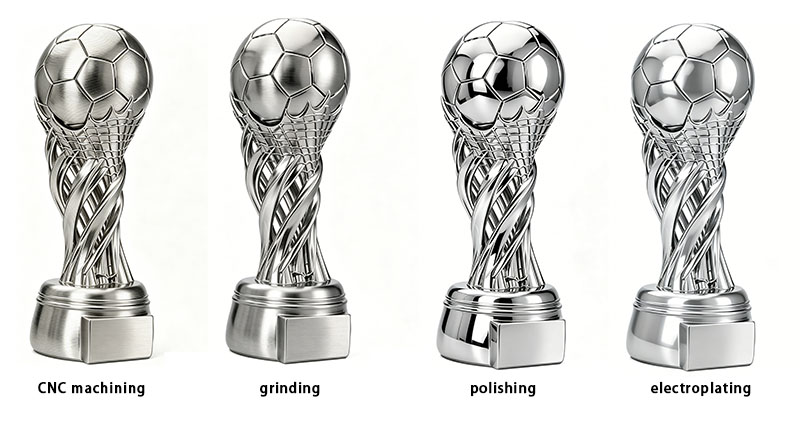
A Brief History of Silver Plating Development
The history of silver plating dates back to ancient times. Rudimentary silver-plating techniques emerged in ancient Egypt and China as early as the pre-Christian era, primarily for the decoration of handicrafts; these early processes were relatively primitive, relying largely on the amalgam method or chemical displacement. In the 18th century, advancements in chemistry led to the wider application of amalgam and chemical silver-plating methods in the manufacture of decorative items and everyday goods. The 19th century witnessed a revolutionary breakthrough in silver-plating technology with the establishment of electrochemical theory and the invention of electroplating. Electroplating produced coatings that were more uniform, lustrous, and strongly adherent, rapidly superseding traditional chemical methods to become the mainstream industrial process. Throughout the 20th century, silver-plating technology continued to evolve, expanding its scope of application from decorative items to high-end manufacturing sectors such as electronics, machinery, and aerospace. In recent years, driven by increasingly stringent environmental regulations and technological progress, the focus of research and application has shifted toward new, eco-friendly processes and precision technologies—such as cyanide-free, nano-scale, and pulse silver plating—aimed at addressing issues associated with traditional methods, such as high pollution levels and limitations in coating performance.
Coating Characteristics and Physical Properties of Silver
Silver possesses the highest electrical and thermal conductivity of any metal found in nature. Silver coatings are relatively soft and highly ductile, capable of withstanding a certain degree of bending and impact without cracking. Regarding optical properties, silver exhibits extremely high reflectivity across the visible spectrum—and outperforms other metals in the infrared range—making silver coatings vital for applications such as optical reflectors and thermal control coatings.
Silver Electroplating Process
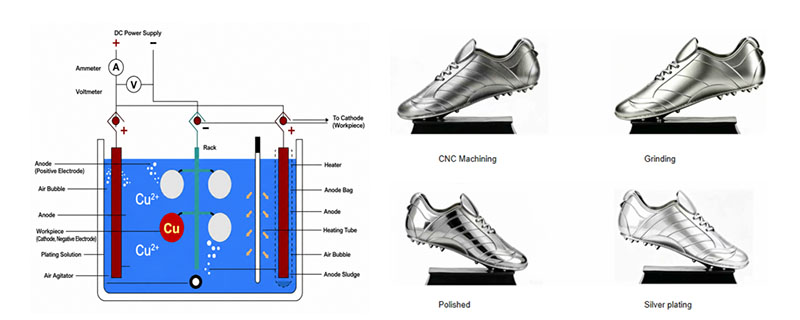
Silver electroplating is a process that utilizes electrochemical principles to reduce silver ions from a plating solution and deposit them onto the surface of a workpiece under the influence of a direct current (DC) electric field. It is currently the mainstream method for industrial-scale production. Cyanide-based silver plating is a traditional process characterized by high bath stability, excellent throwing power (resulting in uniform coating thickness), and fine, lustrous deposits. However, due to the extreme toxicity of cyanides and the significant environmental pollution they cause, this method is increasingly being restricted or phased out. Cyanide-free silver plating is an environmentally friendly process that employs organic complexing agents—such as thiosulfates, sulfites, imidazoles, or amines—as substitutes for cyanides. While safe and eco-friendly, these systems still offer room for improvement regarding bath stability and the tarnish resistance of the coating; nevertheless, they represent the key direction of industry development.
What Is electroless silver plating?
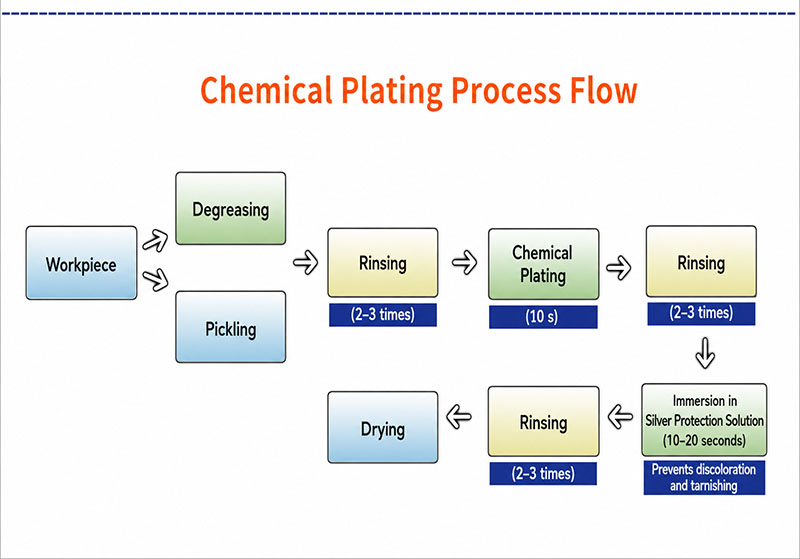
Electroless silver plating relies on redox reactions within a solution to deposit a silver layer, requiring no external power source. This process overcomes limitations regarding substrate conductivity, enabling silver plating on non-conductive materials such as plastics, ceramics, and glass; it offers excellent coating uniformity and is suitable for workpieces with complex shapes. It is commonly used to manufacture components such as reflectors and electromagnetic shielding parts.
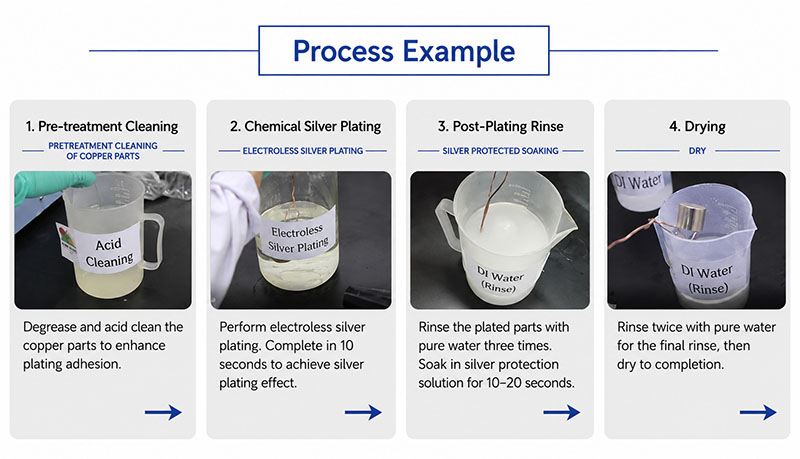
CT-360 electroless silver plating for copper features a 10-second plating process; it is cyanide-free, non-toxic, and safer.
Non-metallic silver plating
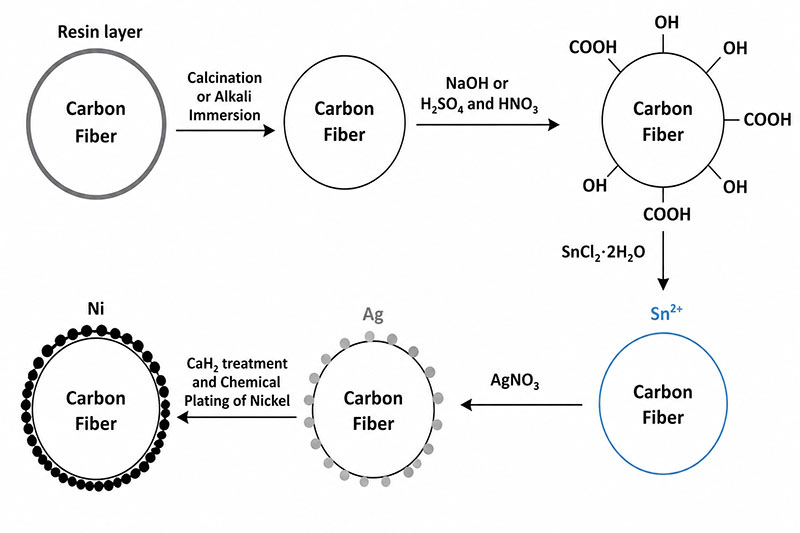
Electroless plating method for depositing silver or nickel on carbon fiber surfaces
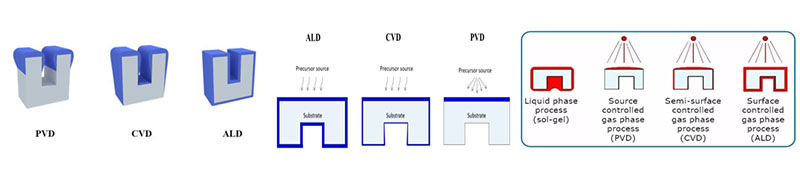
Comparison of Thin-Film Deposition Technologies
Comparison of APCVD, LPCVD, PECVD, HDPCVD, SACVD and MOCVD
Item | APCVD | LPCVD | PECVD | HDPCVD | SACVD | MOCVD |
Reaction Environment | Atmospheric pressure, approx. 400–500°C | 1/1000 atm pressure, approx. 500–900°C | Plasma-enhanced, approx. 200–500°C | High-density plasma | Sub-atmospheric pressure | Atmospheric or low pressure, approx. 500–1500°C |
Applications | Micron-scale processes, commonly used for depositing dielectric layers | Deposition of SiON, Si₃N₄, polysilicon and other thin films | Used in various semiconductor processes to deposit different thin films | Gap filling and deposition of USG, FSG, PSG and other films | Processes such as STI; deposition of BPSG, SAF and other films | Semiconductor materials such as GaN |
Features | Simple reaction process, fast deposition rate; prone to contamination; poor step coverage | Overcomes APCVD contamination issues; strong step coverage; limited gap-filling capability | Low-temperature process; comprehensive thin-film deposition capability; widely used | Simultaneous deposition and etching; excellent gap-filling ability; high film density; low contamination | High-pressure decomposition of ozone generates free oxygen radicals at elevated temperatures, enabling gap filling | Produces high-purity thin-film materials at relatively low temperatures; flexible control of reactant species and ratios |
Technology Maturity / Advancement | Relatively outdated | Widely used | Widely used | High potential | High potential | High potential |
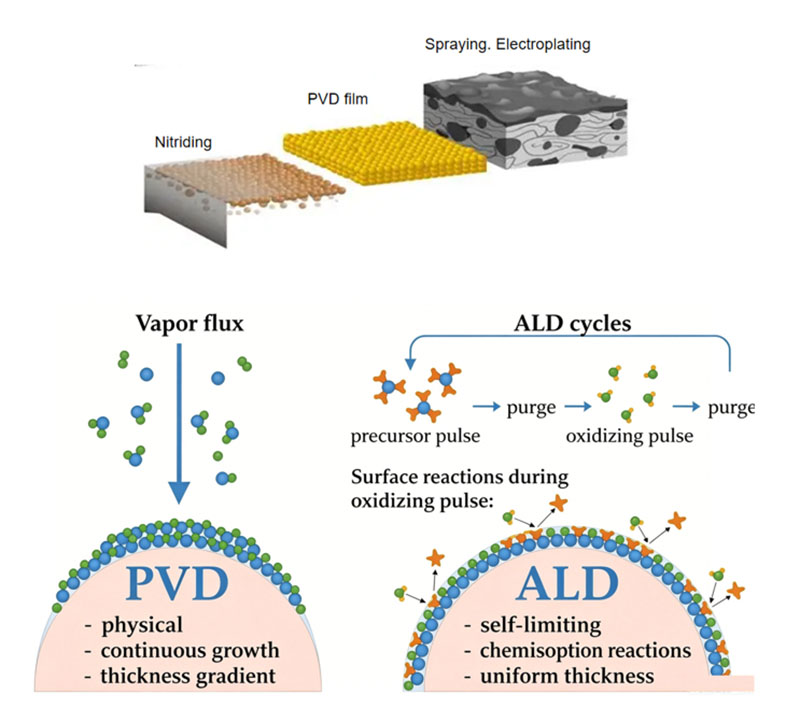
Physical Vapor Deposition (PVD) silver coating is performed in a vacuum environment, where silver atoms are deposited onto the workpiece surface via evaporation or sputtering. This process yields coatings of extremely high purity with controllable thickness (down to the nanometer scale) and causes minimal damage to the substrate; it is frequently used in precision sectors such as high-end optical lenses and semiconductor chips.
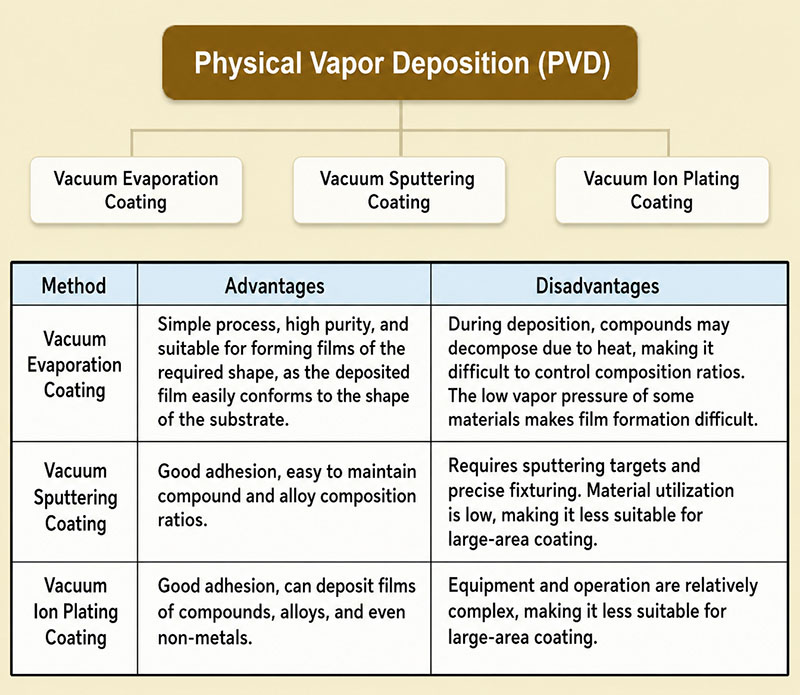
Comparison Between PVD and CVD
Item | PVD (Physical Vapor Deposition) | CVD (Chemical Vapor Deposition) |
Material Source | Vaporized coating material and reactive gases | Compound vapors containing film-forming elements, reactive gases, etc. |
Activation Method | Resistance heating, electron beam heating, arc discharge, etc. | Thermal energy, high temperature, chemical reaction energy |
Deposition Temperature | 250–2000°C (evaporation source) 25°C to suitable substrate temperature (substrate) | 150–2000°C (substrate) |
Deposition Rate | 5–250 μm/h | 25–1500 μm/h |
Applications | Decorative coatings, electronic materials, optical coatings | Material refinement, decorative coatings, surface protection, electronic materials |
Coating Materials | Most solid materials (except those difficult to evaporate, such as C, Ta, W), compounds, and thermally stable compounds | Most metals (except Ag, Au and alkali metals), carbides, oxides, nitrides, borides, silicides, fluorides, sulfides, intermetallic compounds, phosphides, etc. |
1. Low contact resistance solution
Surface Treatment | Contact Resistance (mΩ·cm²) | Corrosion Resistance | Cost | Application Scenarios |
gold plating layer (0.5–1 μm) | <10<> | High | High | High-signal, precision connectors |
Silver plating (3–5 μm) | <5<> | Medium | Medium–high | High current, anti-oxidation environments |
Silver plating (3–5 μm) | 10–20 | Low | Low | Low-cost general-purpose connectors |
Palladium-Nickel plating (Pd/Ni) | 15–30 | High | High | Wear-resistant, high-end industrial applications |
2. Key Technical Points
• Gold Plating: Gold plating (alloy/nickel) is preferred, achieving a strength of up to 200HV, minimizing impedance rise due to low pull-out loss.
• Silver Plating: A clear coating plus an anti-chemical coating (such as organic protective film) is used to prevent surface oxidation caused by chemicals.
• Anti-oxidation Plating: Suitable for use with antioxidants to reduce oxidation risk (e.g., automotive fingerprint parts).
Comparison of Metal Coatings
Why Is 925 Silver Called Sterling Silver?
In English learning, we encounter "Sterling Silver," but this doesn't refer to sterling silver; it refers to 925 silver.
Many people know it's related to silver, but they don't understand why it's not sterling silver, but 92.5% silver; and why it's called "Sterling." Today, we'll explain the history and extended meanings behind this word.
I. The Original Meaning of Sterling
The word "Sterling" isn't a metallurgical term, but comes from the Middle English *sterreling*, originally meaning "little star." The reason is interesting: in the 12th century, a type of silver coin circulating in England was engraved with stars, hence the name *sterling penny*.
This silver coin had extremely high credibility, gradually giving "sterling" the meaning of "pure and reliable." Later, "sterling silver" became the fixed name for standard silver.
II. Why 92.5%?
Many people ask, isn't purer silver always better? Why is 7.5% copper added? While pure silver (99.9%) is beautiful, it's too soft, easily bent or scratched, and unsuitable for everyday wear and use. Adding a little copper greatly increases the silver's hardness and wear resistance while maintaining its luster. Through long-term practice, 92.5% silver + 7.5% copper has proven to be the most balanced ratio. Historically, in 1275, King Edward I of England issued a decree requiring all silverware to meet this standard. Subsequently, the Goldsmiths’ Company of England was responsible for inspection and stamping. This tradition continues to this day and has become the internationally recognized standard for silverware. Therefore, seeing "925 silver" can be understood as: genuine standard silver.
III. The Difference Between Pure Silver, 925 Silver, and Silver Plating
Pure Silver (Fine Silver, 999)
Contains 99.9% or higher purity, but is too soft, often used for silver coins, bars, or collectibles. 925 sterling silver contains 92.5% silver, is strong and shiny, and is the main material for jewelry and tableware. Silver-plated silver is simply a thin layer of silver plated onto a base material such as copper or steel; it's cheap but not durable and will tarnish after wear. In short: sterling silver is too soft, silver-plated silver is too superficial, 925 sterling silver is the most practical.IV. Other Meanings of Sterling
Over time, "sterling" has expanded beyond the realm of metals, acquiring many meanings:
* Pound sterling = quality of British pounds
* Sterling character = noble character
* Sterling reputation = excellent reputation
* Sterling work = excellent work
For example:
* She is a woman of sterling character.*
* The committee did a sterling job.*
It can be said that the word "sterling," whether used for metals or people, carries a connotation of "reliability, authenticity, and excellence."
From a small "star coin" to today's globally recognized "925 silver" standard, the word "sterling" has witnessed over 800 years of history.
It is not only a standard for metal composition but also a cultural symbol of "purity and trust."
So next time you see "Sterling Silver" or "925" on jewelry or utensils, consider this:
It is a mark forged by tradition, science, and trust.
Silver Plating Thickness Series and Application Range
1. Thickness Series and Application Range
See table for silver plating thickness series and application range.
Material | Condition | Thickness (μm) | Code | Application |
Copper | L | 3–5 | Ep-Ag3 | Screws with diameter < 0.8 mm; high reliability connectors |
Copper | L/Y | 5–8 | Ep-Ag5 | Screws > 0.8 mm; higher vibration resistance |
Copper | L/Y | 8–12 | Ep-Ag8 | Screws > 0.8 mm; improved vibration resistance |
Copper | T | 100–200 | Ep-Ag100 | General corrosion resistance improvement for copper parts |
Copper | T | 250–500 | Ep-Ag250 | Severe wear conditions; enhanced wear reduction |
Cu alloy | LT | 5–8 | Ep-Cu3Ag5 | High reliability connectors; high-frequency signal conduction |
Cu alloy | YT | 8–12 | Ep-Cu5Ag8 | High reliability + high-frequency signal transmission parts |
Cu alloy | ET | 12–18 / 18–20 / 20–30 | Ep-Cu8Ag12 | High reliability, high-frequency signal components; anti-wear, anti-corrosion |
Stainless steel | LT | 3–5 | Ep-Ag3 | Screws < 0.8 mm; high reliability connectors |
Stainless steel | LT | 5–8 | Ep-Ag5 | Screws > 0.8 mm; higher vibration resistance |
Stainless steel | LT | 8–12 | Ep-Ag8 | Screws > 0.8 mm; improved vibration resistance |
Copper alloy composite | LY | 5–8 | Ep-Ag5 | Improves electrical conductivity and stability; suitable for medium-high reliability contacts |
Copper alloy composite | YT | 8–12 | Ep-Ag8 | Higher reliability and wear resistance |
Copper alloy composite | ET | 12–18 | Ep-Ag12 | High reliability + high wear resistance; improved bonding strength |
Characteristics of Silver Plating
(1) The plating is silvery-white. After brightening and passivation, the silver plating is a bright, slightly yellowish silvery-white. The density of silver is 10.5 g/cm³, the melting point is 960℃, the Brinell hardness is HB60~HB140, the reflectivity is about 95%, and the resistivity is 1.58 μΩ·cm.
(2) It is a cathodic plating for copper, copper alloys, and steel, and has high chemical stability. However, it has poor corrosion resistance in media containing sulfur and ammonia. To prevent the silver plating from discoloring due to the action of sulfides in the atmosphere, it can be brightened and passivated or plated with beryllium hydroxide, but this has a significant impact on welding performance.
(3) The plating has high electrical conductivity, thermal conductivity, oxidation resistance, and good weldability.
(4) If an acid-free flux is used, it can bond well with the underlying metal during welding.
(5) The plating is relatively soft, can withstand bending and impact, and has excellent friction-reducing effect.
(6) The operating temperature is not greater than 700℃.
Usage Regulations for Silver Plating
(1) Cannot be used as a protective layer for ferrous metals under atmospheric conditions.
(2) Titanium alloys in contact with silver plating may experience solid silver embrittlement (referred to as "silver embrittlement") at certain temperatures. Measures should be taken to prevent silver embrittlement.
(3) Parts in contact with sulfur-containing rubber or other sulfur-containing non-metallic materials cannot be silver-plated.
(4) Cannot be used as a base layer for gold plating, because silver plating will form a non-conductive film on the surface through gold diffusion.
(5) Blind holes, slots, or slits with a diameter or width not greater than 5 mm are allowed to be unplated if their depth is not less than 3 times their diameter or width; if it is less than 3 times, the plating thickness is not required.
(6) Through holes with a diameter or width not greater than 5 mm are allowed to be unplated if their depth is not less than 5 times their diameter or width; if it is less than 5 times, the plating thickness is not required.
Material | Condition | Thickness | Code | Application |
Titanium alloy | T | 3–5 / 5–8 | Ep-Ag3 / Ep-Ag5 | Reduces wear; suitable for small precision parts |
Titanium alloy | T | 8–12 | Ep-Ag8 | Improved wear resistance |
High-strength alloy | ET | 30–36 | Ep-Ag30 | Anti-oxidation, anti-galling (anti-seizing) |
What Is Silver-Antimony Alloy Coating?
1. Thickness series and application range
See table for the thickness series and application range of silver-antimony alloy coatings.
Material | Environment Condition | Thickness (μm) | Code | Application |
Copper & copper alloys | LY | 3–5 | Ep-AgSb3 | 1) Improve electrical conductivity, stable contact resistance, and high reflectivity requirements 2) Parts requiring plug-in/out (insertion/extraction) and wear resistance |
Copper & copper alloys | YT | 5–8 | Ep-AgSb5 | 1) Parts requiring conductivity under high friction 2) High-frequency conductive components |
2. Characteristics
(1) The coating is silver-white.
(2) The coating has high electrical conductivity, thermal conductivity, oxidation resistance, and good weldability.
(3) Compared with silver plating, silver-antimony alloy plating has better wear resistance and higher hardness.
3. Usage Regulations
(1) It cannot be used as a protective layer for ferrous metals under atmospheric conditions.
(2) Parts in contact with sulfur-containing rubber or other sulfur-containing non-metallic materials cannot be plated with silver-antimony alloy.
(3) It cannot be used as a base layer for gold plating because the silver-antimony alloy plating will form a non-conductive film on the surface through gold diffusion.
(4) Blind holes, slots, or slits with a diameter or width not exceeding 5 mm are allowed without plating if their depth is not less than 3 times their diameter or width; if less than 3 times, the plating thickness is not required.
(5) Through holes with a diameter or width not exceeding 5 mm are allowed without plating if their depth is not less than 5 times their diameter or width; if less than 5 times, the plating thickness is not required.


